Physiology of sedentary behavior: sit less, move more, AND exercise

‘‘By learning to sit less and move more, we can prevent the metabolic damage that a single workout simply cannot undo.’’
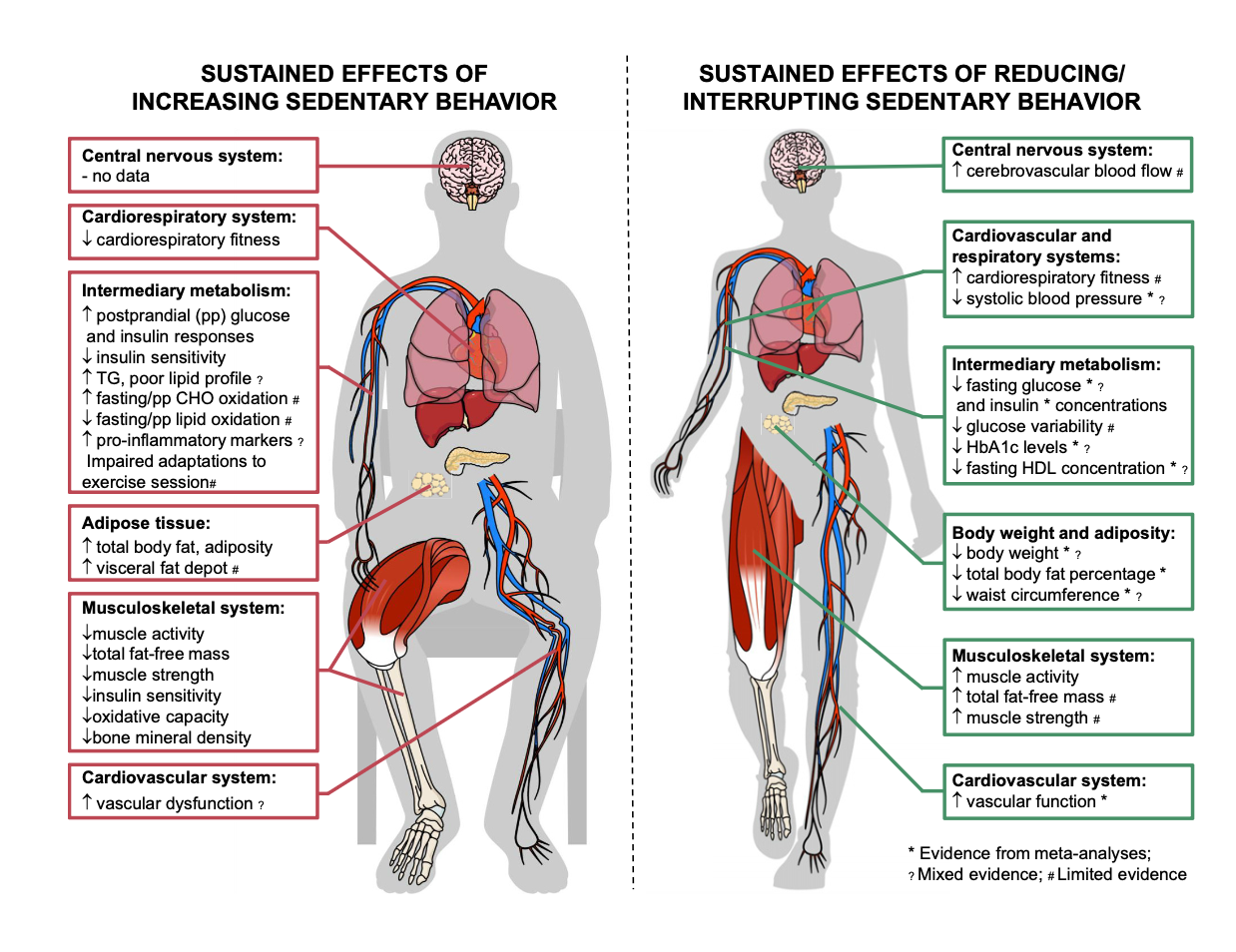
For years, we’ve been told that the formula is simple: exercise more. Finish your workout, break a sweat, and you’ve done your job. But the science is telling a different story. As I’ve explored in previous posts, the science is shifting toward a much more complete picture of how our bodies actually work. It’s not just about that one hour of sweat, it’s about what happens during the other 23 hours of the day.
The 3-part formula for health
We are entering a new era of inactivity physiology, a field of study that looks specifically at the biological cost of sitting, separate from the benefits of exercise (1). The latest research suggests that to truly protect our metabolism, we need a three-part approach: Sit Less, Move More, AND Exercise.
To understand why, we first have to clear up a major misconception: the difference between being physically inactive and being sedentary.
In the scientific world, these are two very different things. You are physically inactive if you don't meet the standard WHO exercise guidelines (like 150 minutes of moderate activity per week). However, sedentary behavior is defined by your posture, any time you are sitting or lying down while awake and burning very little energy.
This leads to a phenomenon researchers call the physically active but highly sedentary person. This is the classic modern desk worker, someone who goes for a 5 km run in the morning but then sits for 9 to 11 hours at a computer. Even though this person is active because they exercise, their body still suffers from the unique biological shutdown that comes from prolonged sitting.
The goal of our Exericse Snacks approach isn't to replace your gym session. Instead, it’s about realizing that high volumes of sitting have adverse effects even if you exercise regularly.
By learning to sit less (breaking up desk time) and move more (increasing background activity like walking or standing), we can prevent the metabolic damage that a single workout simply cannot undo.
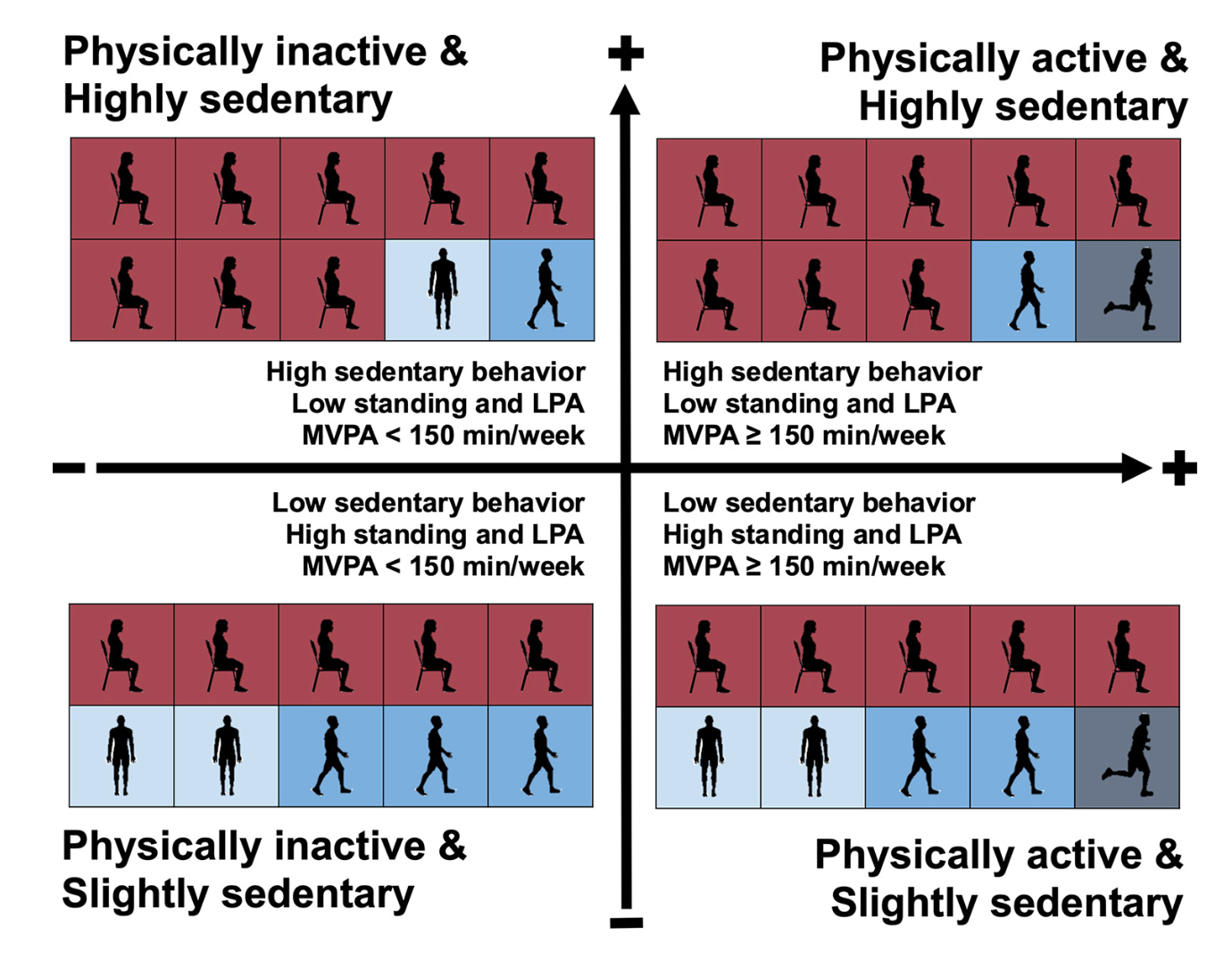
The Movement Matrix helps you identify where you fall in modern lifestyle patterns. It highlights a key idea: sitting too much and exercising too little are two separate problems. LPA: Light-Intensity Physical Activity. MVPA: Moderate-to-Vigorous Physical Activity.
The bent-artery crisis: why your posture matters
When you sit down, you aren’t just resting your feet, you are physically altering the plumbing of your cardiovascular system. Imagine a garden hose with a sharp kink in it. That is essentially what happens to the major arteries in your hips and behind your knees when you settle into a standard chair, a phenomenon researchers call bent-artery morphology.
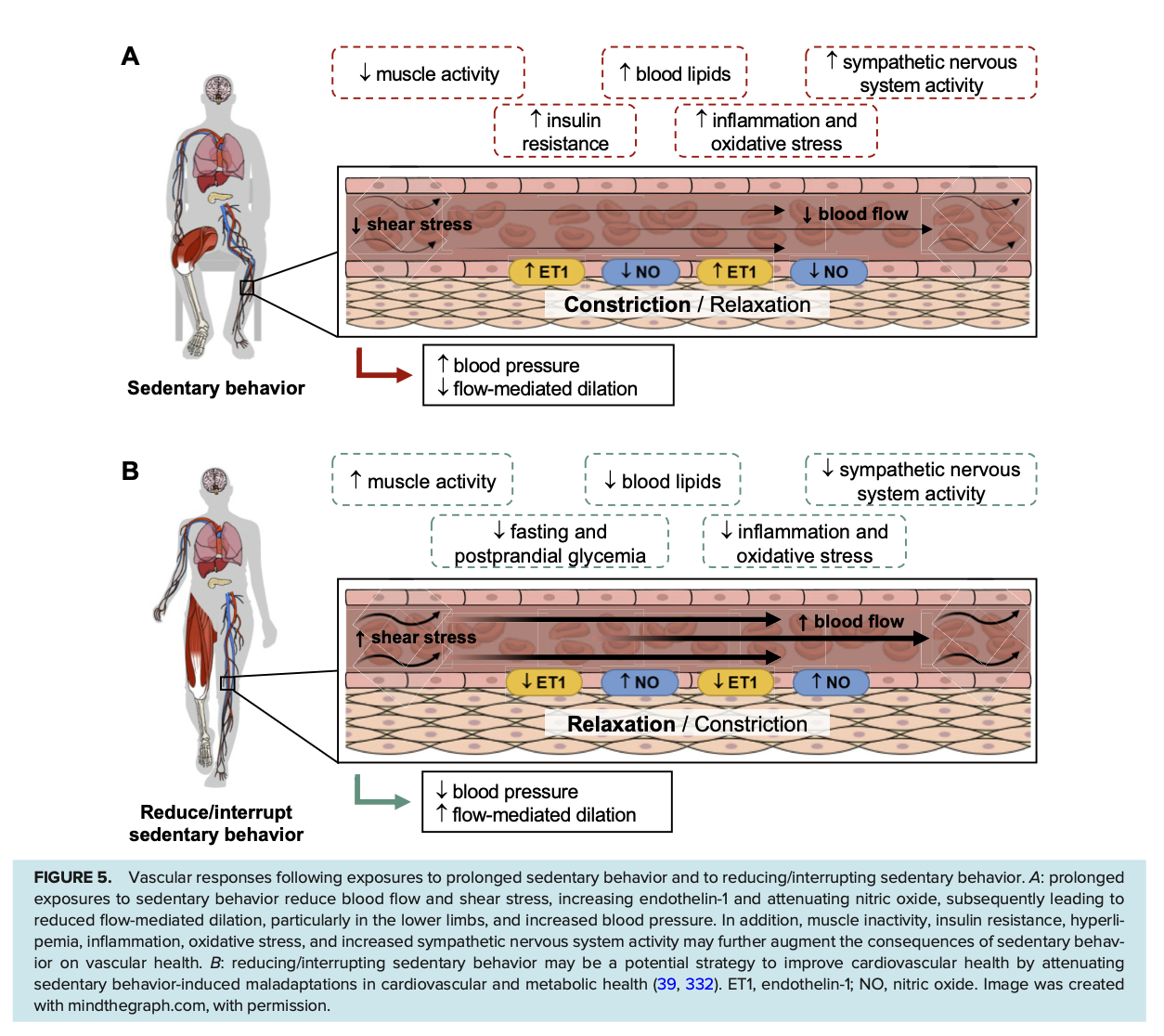
These 90-degree angles force blood to flow in turbulent, irregular patterns rather than a smooth, steady stream. This physical change triggers a rapid chain reaction.
The Loss of "Cleaning" Friction: within just 30 minutes of sitting, the friction of blood against your vessel walls, a vital health signal called shear stress drops significantly in your legs. This friction is a key maintenance signal for your body. When flow is strong, your vessels produce nitric oxide, which keeps your arteries flexible and wide. When you sit and that flow slows down, your vessels begin to stiffen.
The Pooling Effect: Sitting puts your second heart out of commission. Your leg muscles normally act as a pump to push blood back up toward your torso. Without those contractions, blood begins to pool in your calves after about two hours, which increases pressure and further slows down your overall circulation.
Rapid Biological Shutdown: This isn't a long-term problem that takes years to develop, it happens in real-time. Research shows that your vessels ability to dilate appropriately, their vascular function can be significantly impaired in as little as 1.5 to 3 hours of uninterrupted sitting.
The "Bent-Artery Crisis" explains why even a fit person can suffer from poor circulation and vascular stress during a workday. The physical act of sitting creates a hemodynamic storm that your single workout can’t always prevent.
How muscles "forget" how to burn fat
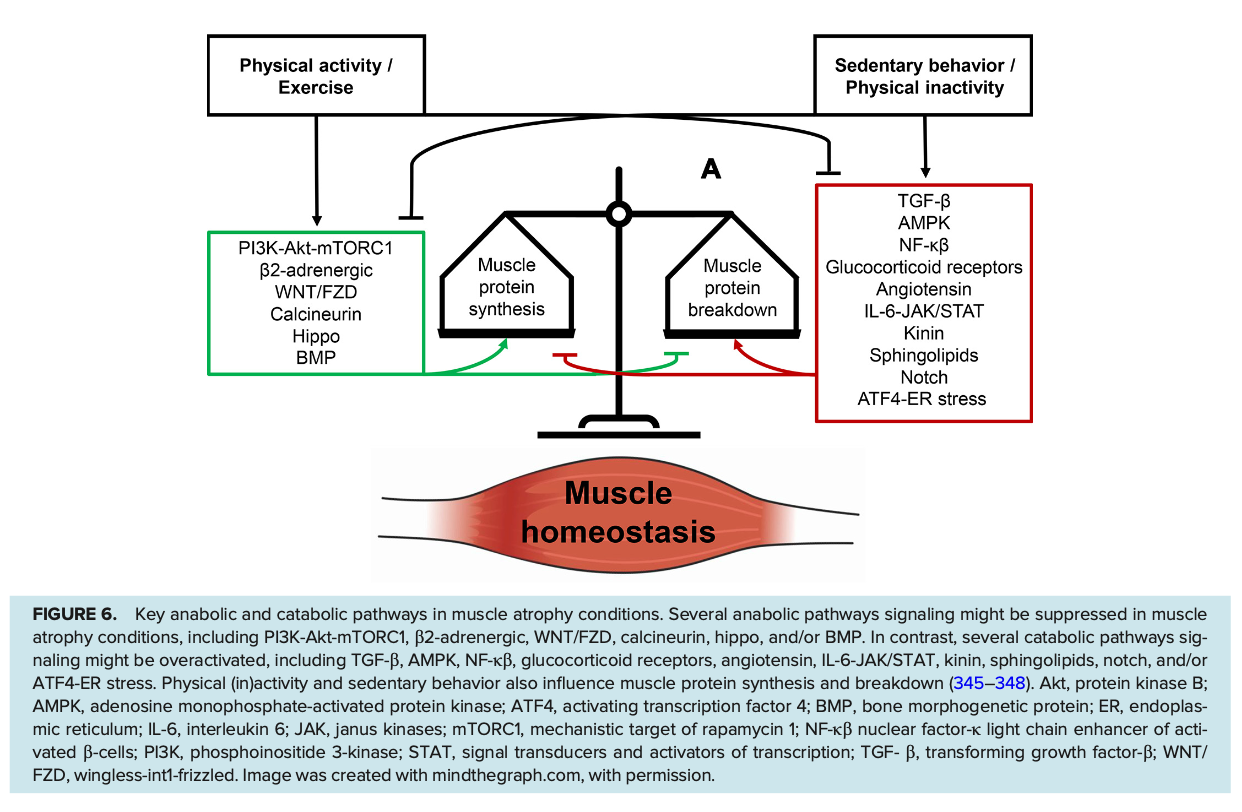
Muscles are not static tissues, they are incredibly adaptable engines that remodel themselves based on how they are used. When you sit for the majority of the day, you are sending a specific signal to your muscle fibers: "We don’t need to stay in endurance mode.”
This triggers a process researchers call fiber transformation. In a healthy, active body, your muscles are rich in oxidative (Type 1) fibers. These are often called slow-twitch fibers, and they are your body’s primary fat-burning engines. They are designed for low-intensity, all-day activity, the kind of background noise movement we’ve been discussing.
When you transition to a sedentary lifestyle, your body begins to shift these fibers from the oxidative type toward a glycolytic (Type 2) type. These "fast-twitch" fibers are designed for short bursts of power, good for gym, but have a significant downside for the desk worker, they primarily burn sugar (glucose) and are very poor at burning fat.
The biological consequences this re-wiring of your muscles happens surprisingly fast. Studies on humans (1) following periods of restricted movement show that slow-twitch fibers begin shifting into hybrid or fast-twitch types in as little as 20 days.
The result of this shift is a state called metabolic inflexibility. Because your muscles have physically changed their hardware,"they lose the ability to effectively switch between burning fats and carbohydrates. Even if you have plenty of stored body fat to use for energy, your muscles become sugar-dependent, leading to:
Reduced Fat Oxidation: your body’s natural capacity to burn fat as fuel drops significantly.
Increased Muscle Fatigue: glycolytic fibers tire out much faster than oxidative ones, which may explain why you feel "heavy" or exhausted after a day of just sitting.
Dependence on Glycogen: your system begins to prioritize burning through your limited sugar stores, leaving you in a metabolic loop that makes fat loss much harder.
Important! While preventing the loss of Type 2 fibers through resistance training is a goal of healthy aging, switching your oxidative fibers to glycolytic fibers through sitting is a maladaptation that mutes your fat-burning engine and accelerates muscle wasting.
The invisible inflammation
When we think of inflammation, we usually imagine a swollen ankle or a sore throat. However, the sources reveal a more subtle and dangerous version: low-grade systemic inflammation. This isn't a response to an injury, it’s a biological reaction to prolonged muscle silence.
The research (1) shows that when you sit for long, uninterrupted periods, your body begins to produce higher levels of pro-inflammatory markers, such as C-reactive protein (CRP) and Interleukin-6 (IL6). In fact, just 3 to 5 hours of continuous sitting has been shown to increase plasma IL-6 concentrations by 38% to 50% in both healthy adults and those with central obesity
This invisible inflammation begins deep within your tissues. In your body fat, prolonged sitting can activate genes linked to inflammation, such as MCP-1, sending out distress signals even while you feel completely at rest.
The most important takeaway from this new science is that this inflammatory response is often independent of your exercise levels.
Over time, this constant, low-level simmer of inflammation is a major contributor to the development of cardiovascular disease and other chronic conditions. It essentially creates a metabolic environment where your body is constantly under stress, making it much harder to stay lean and healthy.
Sitting and your brain
While most of the Silence of the Muscles discussion focuses on what happens from the waist down, the research reveals that biological silence also travels north to the brain. Sitting doesn't just kink the "pipes" in your legs, it appears to reduce the vital flow of blood and oxygen to your central nervous system.
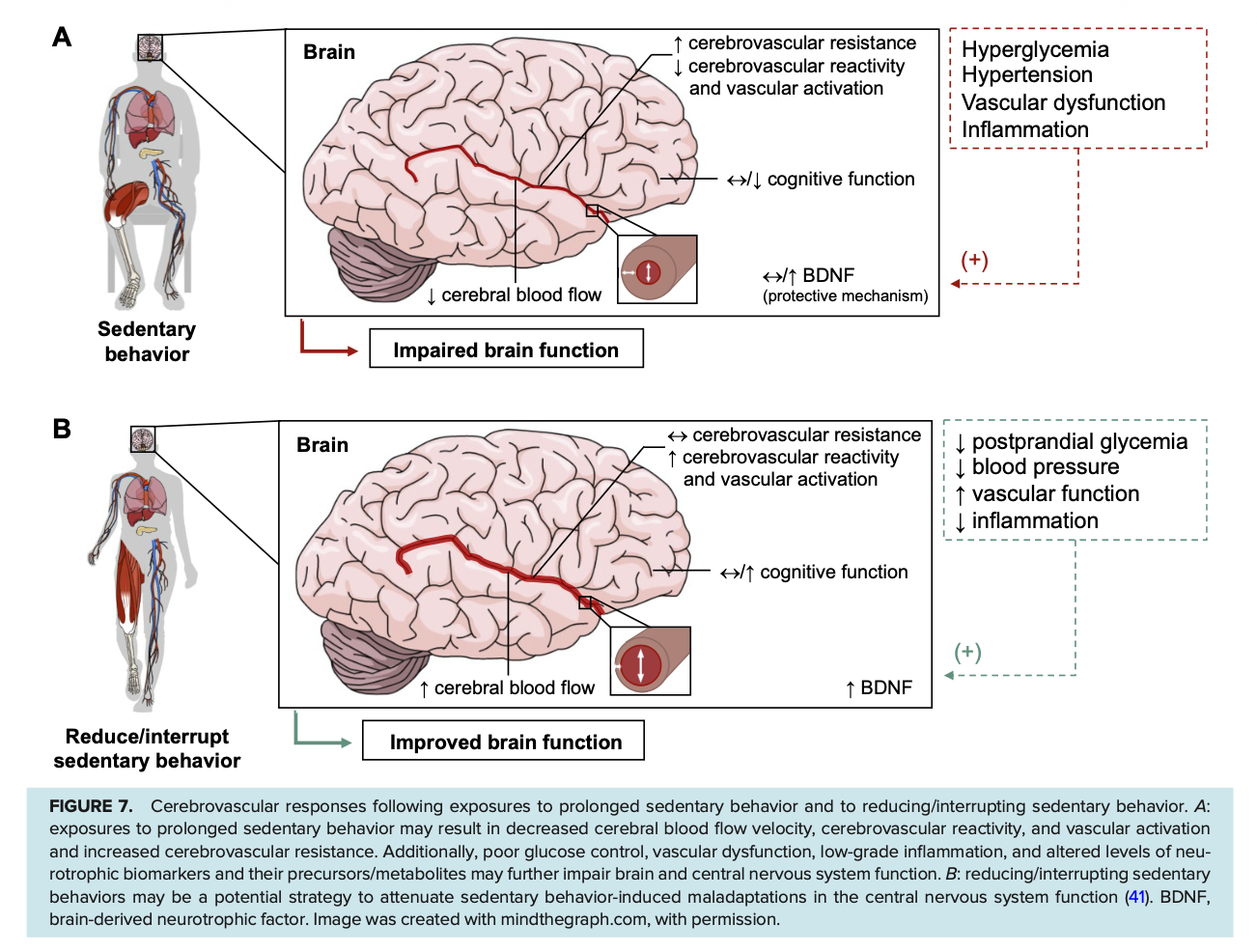
When you sit for 4 to 6 hours without a break, the speed of blood flowing through your middle cerebral artery begins to drop. Studies (1) report a reduction in blood flow velocity and cerebrovascular conductance of about 3% to 6% in healthy adults during a typical sedentary workday. For those over age 55 with existing cardiovascular risks, this decline can be even sharper, reaching 8% in as little as three hours.
This brain fog isn't just a feeling, it’s a measurable physiological state where oxygen delivery and glucose utilization in the brain are altered. In simple terms, when your body goes silent, your brain may receive less of the flow and nutrients it needs to stay sharp.
The solution for your brain is the same as the solution for your metabolism: frequent interruptions. A 2-minute walking break every 30 minutes is enough to help prevent the decline in cerebral blood flow caused by prolonged sitting.
Sit less, move more, and exercise
Your body needs frequent interruptions to counter the bent-artery crisis and prevent inflammatory spikes. Set a timer every 30 minutes and move for just 2 to 5 minutes.
Increase your background noise. Focus on light physical activity (LPA), the standing, walking, and light movement that keeps your metabolic engines online throughout the day. High volumes of LPA have been shown to be more beneficial for blood sugar and fat clearance than a single bout of intense exercise followed by hours of sitting.
Keep the gym on your calendar. Structured MVPA (moderate-to-vigorous physical activity) is still the gold standard for building muscle mass, strength, and cardiorespiratory fitness. Exercise gives you the peak capacity, while daily movement provides the base stability your metabolism needs.
You don't have to choose between being a gym rat and a "desk worker." The goal is to avoid the trap of the sedentary exerciser, the person who hits the gym but remains biologically quiet for the other 23 hours.
References:
Read more posts: