How I researched human muscle asymmetry
Asymmetry is normal
“I realized that despite my years of coaching, I had been operating under the assumption that the human body is or at least should be a perfectly balanced machine.”
I started my Master’s degree in Sport Science at Wingate University when I was 45. Frankly, I entered academia with a lot of ego, 20 years of personal and coaching experience, and three successful businesses behind me.
But after just two years of studying, my understanding of general health, fitness, and human biology changed drastically. Here is the link to the research that came out of this journey: “Kabalkin, A., & Dunsky, A. (2025). Unilateral Posterior-Chain Training as a Perturbation Strategy for Balance Improvements in Middle-Aged Adults. International Journal of Exercise Science”.
My transformation began when I truly understood the Dunning–Kruger effect, not just as a concept, but personally.
If you are not familiar with it, the Dunning–Kruger effect is a cognitive bias in which people with limited knowledge or competence in a specific domain tend to overestimate their own ability or understanding.
I realized that despite my years of coaching, I had been operating under the assumption that the human body is or at least should be a perfectly balanced machine. I thought symmetry was the goal. But as I dug into the literature, I found that biology actually favors a bit of chaos.
It turns out, perfect symmetry is rare in nature. Our internal organs are lopsided (heart on the left, liver on the right), and our brains are structurally and functionally asymmetrical. In fact, nature often breaks symmetry on purpose to make complex systems like our nervous system work more efficiently (1, 2).
But here is where things get tricky, especially for those of us in middle age. While some asymmetry is normal, too much of it in our muscles and movement patterns can become a liability. As we age, our ability to coordinate movement declines, leading to instability (3).
I learned that "limb asymmetries" basically, having one leg that is significantly stronger or more coordinated than the other, are often linked to poor postural control. And impaired postural control is a one-way ticket to falling, which is a leading cause of injury as we get older.
This led me to the core question of my Master's thesis: If we are naturally asymmetrical, can we use that inequality to hack our balance? I decided to look at "perturbation training." In plain English, this usually means pushing or tripping people (safely!) to teach their bodies how to react. But you usually need expensive machines and harnesses to do that. I wanted to see if we could get the same brain-training benefits just by making people stand on their "clumsy" leg (the non-supportive one) and perform a challenging movement.
My study focused on the Single-Leg Romanian Deadlift (SLRD). It’s a move that makes you tip forward while balancing on one foot. It creates a "self-induced perturbation" essentially, you are trying not to fall over while lifting a weight.
My theory was simple but: If I took a group of middle-aged adults and trained only their weaker, wobbly leg, would their overall balance improve? Could we fix the whole system by stressing just one part of the chain?
What I found surprised me, and it might change the way you think about training for health.
The “Lazy” leg experiment
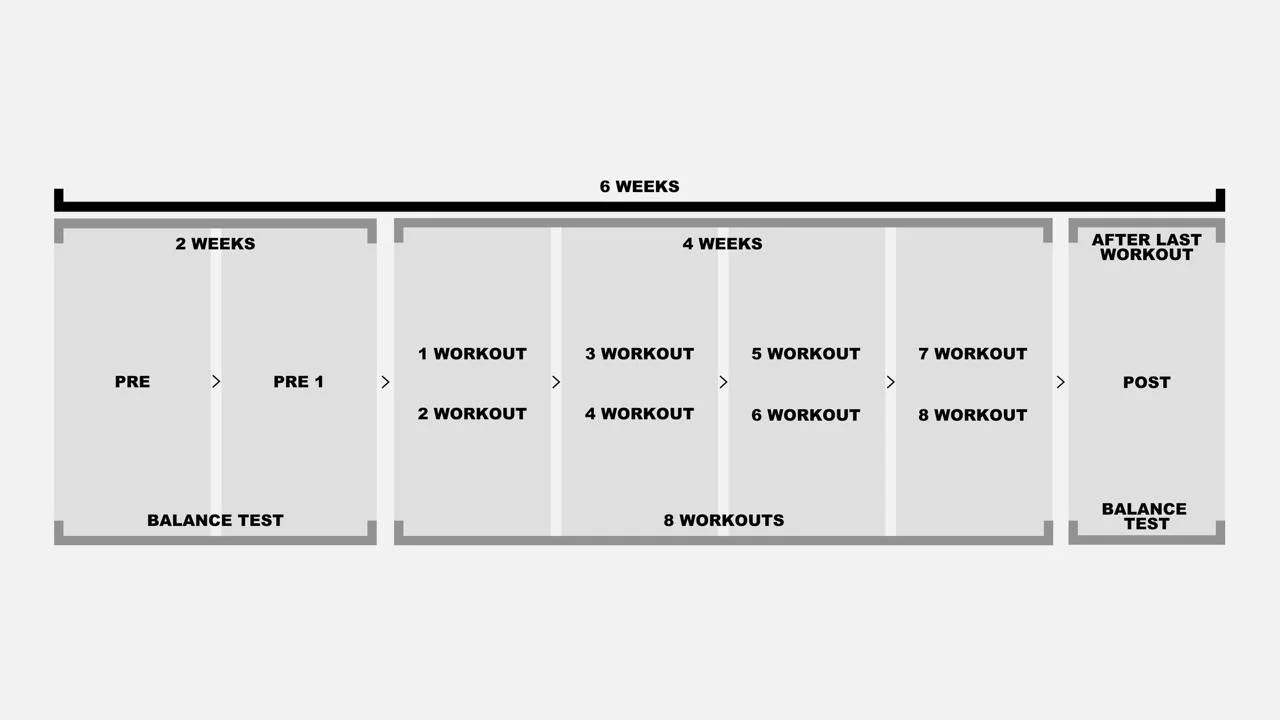
I recruited 27 brave souls for my study in my gym “AIFIT”. They were all middle-aged (around 45 years old) and active, but none of them were professional athletes. The plan was simple but demanding: for four weeks, they had to perform the Single-Leg Romanian Deadlift (SLRD) twice a week.
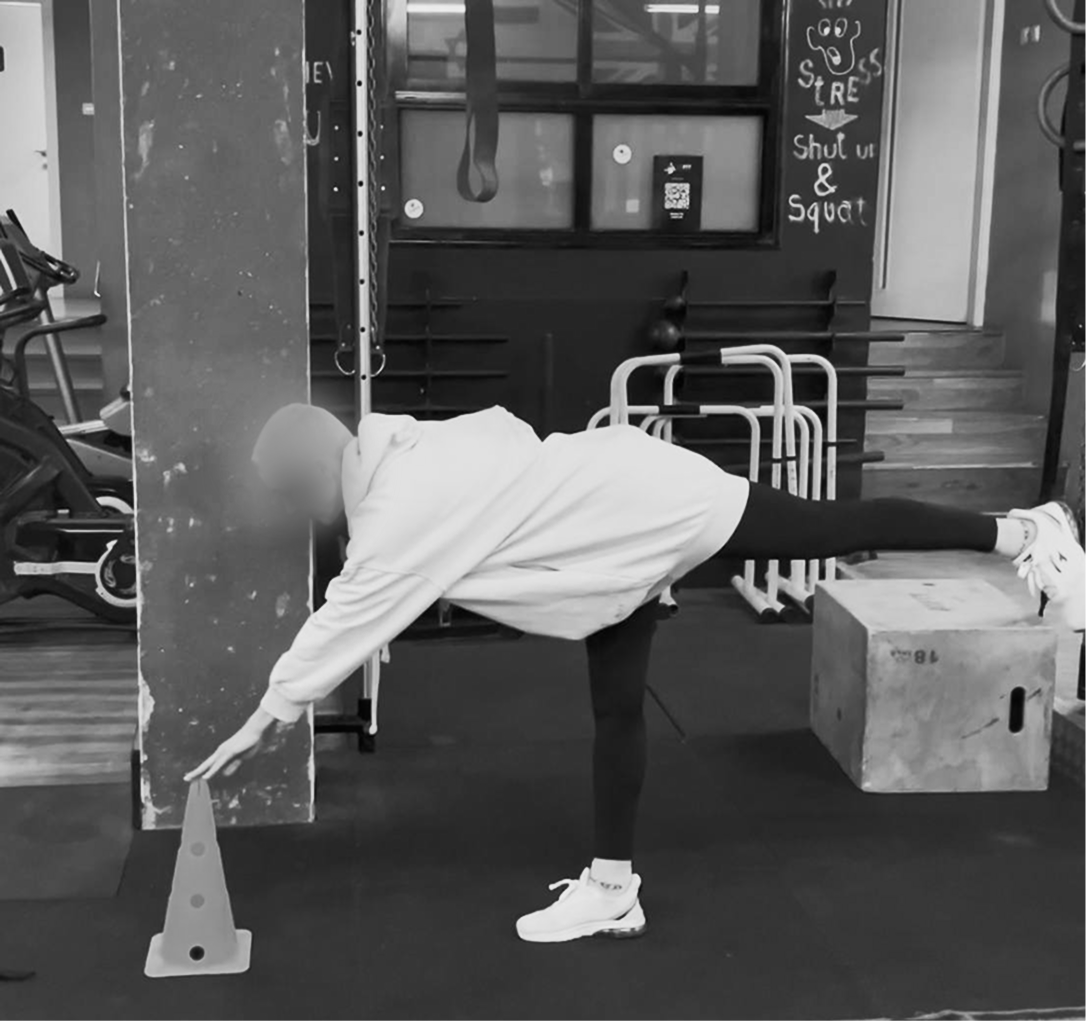
But here was the catch: they only trained one leg. Specifically, we identified their "non- upportive" leg, the one that was wobbly and less reliable when balancing and ignored the "good" leg entirely. I wanted to see if targeting the weak link would force the brain to rewire how it handles balance.
We measured their balance twice before (re- est) and after the four weeks using force plates and the functional "Y Balance Test," which basically looks like you are trying to slide a checker piece as far as you can with your foot while balancing on the other.
The plot twist
I expected the trained leg to get better. That makes sense, right? You practice on your left leg, your left leg gets stronger and more stable. But that is not exactly what happened.
When I looked at the results based on which leg was trained versus untrained, the numbers were a bit shy. The improvements didn't look statistically huge.
However, when we stepped back and looked at the participants' overall movement, something fascinating appeared. Both legs got better.
Specifically, the participants improved significantly in what we call the "posterolateral reach", basically, reaching backward and to the side. This is a tricky movement that requires serious coordination to keep from tipping over. Even though we only hammered away at the "clumsy" leg, the "good" leg improved it’s performance too.
The "Magic" of the brain
This phenomenon is called "cross-education" or the "contralateral effect". It turns out that when you train one side of your body hard, your brain sends signals that actually help the other side, too. There are two main theories on why this works:
Cross-Activation: When you intensely focus on balancing on your left leg, the right side of your brain (which controls the left leg) lights up. But the signal is so strong that it "spills over" to the left side of the brain, giving the resting right leg a bit of a workout without moving a muscle.
Bilateral Access: Your brain stores the "memory" of how to balance. Even if you learned the skill on your left leg, your right leg can access that file and use the improved software.
What this means for you
This research suggests that you don't always need complex equipment to "perturb" or challenge your balance. You just need to make yourself unstable.
By performing the Single-Leg Romanian Deadlift, my participants were essentially tripping themselves over and catching themselves, rep after rep. This acted like a "self-induced perturbation". It forced their brains to wake up, stabilize the core, and fire up the hamstrings and glutes to prevent a fall.
The takeaway? If you are over 40 and want to stay upright for the next few decades, you might not need to spend hours standing on both feet. Embracing the wobble on your weaker side might just be the secret to strengthening the whole system.
References:
Read more posts: