MicroDosing Training foundation - part 1
The modern movement paradox

“When we focus intensely on fitness-related goals, we may incorrectly assume that everyone around us shares the same behavior, motivation, or mindset.”
This post begins a series exploring the science behind the MicroDosing Training, a system that has transformed not only my view of modern fitness but also my practical approach to training. I have to admit that age (turning 48 soon), past injuries, experience, and my academic background played a huge role in this transformation.
I have spent more than two decades working with clients and training in different gyms, CrossFit boxes, and functional studios across Europe, Israel, Russia, and South Asia. In these places, it often feels like everyone, or at least many people, working out consistently and shows good physique, health, and sometimes even high performance.
If you go to a gym, a studio, or a playground with gymnastics equipment (Ninja Warrior style), you know this feeling. Social media shapes this perception even more.
We likely experience projection bias. When we focus intensely on fitness-related goals, we may incorrectly assume that everyone around us shares the same behavior, motivation, or mindset.
Most professionals, however, know the real numbers of the physically active population worldwide. And here they are.
Evidence-based statistics of worldwide inactivity
A relatively new study from June 2024 (1) reveals that physical inactivity has become a critical global health issue. In 2022, approximately 1.8 billion people (31.3% of the global population) were not moving enough to stay healthy. This is a significant increase from 26.4% in 2010. If current trends continue, inactivity levels are projected to reach 35% by 2030.
What is insufficient physical activity?

Source: www.thelancet.com
It means failing to meet the specific World Health Organization (WHO) recommendations. To be considered sufficiently active, an adult (18 years and older) must achieve at least:
150 min of moderate-intensity physical activity per week; or
75 min of vigorous-intensity physical activity per week; or
An equivalent combination of both.
The data also highlights that 34% of women are insufficiently active compared to 29% of men. Inactivity is highest in high-income Asia-Pacific and South Asian regions. This lack of exercise is described as a “silent threat” because it significantly increases the risk of heart attacks, strokes, type 2 diabetes, dementia, and certain cancers.
While the overall picture is concerning, 22 countries (12 in Western Europe, 6 in Africa, and 4 in Oceania) are currently on track to meet the goal of reducing inactivity by 15% by 2030.
I believe this data is not a grand revelation for you. However, it is important for our future discussion.
Gym attendance vs. adherence

There are approximately 184–205 million gym memberships worldwide. Despite this large number, many members do not attend regularly. Estimates suggest that about 70% of gym members visit less than twice per week, indicating low overall engagement globally. Some surveys show that around 26% of gym memberships are inactive, meaning the member has not attended in the last 30 days.
Roughly 50% of new gym members quit within the first six months, a widely cited figure in industry reports on membership retention and behavior (2).
So while gyms are full of registrations, they are not always full of consistent action.
I founded and ran two functional gyms, “AIFIT,” and I saw this pattern firsthand. It often follows the classic Pareto principle (the 80/20 rule): around 20% of members are your loyal, consistent clients. The remaining 80% attend irregularly, struggle with adherence, or eventually disappear.
The real problem is not access to fitness. The real problem is sustainability.
We are sedentary civilization
Inactivity looks different for a young mom, a bus driver, or a 45-year-old desk worker. But the common denominator is the same: most of our day happens while sitting.
We like to measure health in workouts, one hour at the gym, a morning run, a CrossFit or Yoga class. But the real story is not the workout. The real story is the other 23 hours.
Modern life has quietly redesigned human movement. Mechanized labor replaced physical work. Office jobs replaced manual tasks. Cars replaced walking. Screens replaced outdoor play. Step by step, movement was engineered out of daily life. Our bodies, however, did not evolve for this environment. They evolved for regular, low-level, frequent movement throughout the day. Instead, we now spend most of our waking hours with minimal muscular activity.
A large global surveillance review in 2020 reported that the average adult sits about 4.7 hours per day, based on data from countries representing nearly half of the world’s adult population. Higher-income countries reported even more sitting (4). Other data suggest that many populations exceed 8 hours per day when work, transport, and leisure time are combined, a level associated with increased health risks (5).
Commuting, desk work, scrolling, streaming, social media, almost everything happens in a chair. This is not just individual behavior.
It is a structural reality. We are not simply inactive people. We are a sedentary civilization.
And this changes how we should think about training.
Sedentary is not the opposite of active
Sedentary behavior is not the same as physical inactivity. It refers specifically to any waking activity performed while sitting, reclining, or lying down that requires very low energy expenditure, typically 1.5 metabolic equivalents (METs) or less.
The metabolic equivalent of task or MET is a standardized measure of energy cost. 1 MET represents the rate of energy expenditure at rest. Activities that require 1.5 METs or less, such as sitting at a desk, watching television, or passive screen use, fall within the sedentary range.
This creates an important paradox.
Importantly, spending many hours sitting does not automatically mean a person is physically inactive according to public health guidelines. An individual may complete 30–60 minutes of moderate to vigorous exercise per day and still accumulate 8–10 hours of sedentary time.
Traditional fitness models focus on isolated training sessions, 45 to 60 minutes of structured exercise. But human biology evolved around frequent, low-intensity movement distributed across the entire day.
If most of our day is sedentary, a single workout may not fully compensate for the remaining hours of immobility.
And this is where, in my opinion, the conversation needs to shift from “How hard do you train?” to “How often do you move?”.
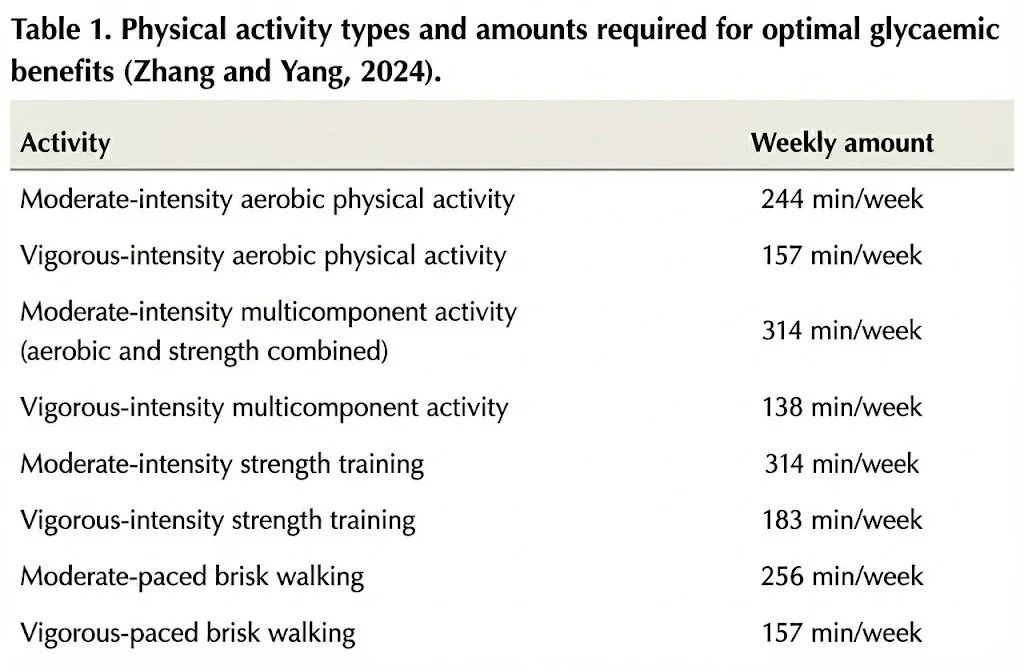
As highlighted in the British Journal of General Practice (5), sedentary behaviour is a separate health construct from insufficient exercise. The two are not opposite ends of the same spectrum. Instead, they represent independent behavioural dimensions. A person can meet exercise recommendations and still be highly sedentary.
The physiological explanation lies in muscular inactivity. When large skeletal muscles, particularly in the legs, remain electrically quiet for prolonged periods, metabolic signaling pathways are suppressed, vascular shear stress decreases, and glucose regulation becomes less efficient. These processes are not fully reversed by a single workout performed earlier in the day.
This is why modern health science increasingly recognizes that:
Exercise protects.
But uninterrupted sitting harms.
And these effects coexist.
In contemporary life, dominated by desk work, commuting, and screen-based leisure, sitting and reclining have become the default posture of adulthood.
Understanding that sedentary behaviour is not simply a “lack of exercise,” but a distinct biological state, is the first step toward correcting the modern movement imbalance.
MicroDosing Foundation
If the core problem of modern life is not simply a lack of exercise, but prolonged and repeated muscular inactivity, then the solution cannot rely only on longer or harder workouts. It must address the structure of the day itself. This is the foundation of MicroDosing Training.
Instead of asking people to compensate for 8-10 sedentary hours with a single intense session, MDT distributes movement across the day. It introduces small, frequent, strategically placed bouts of muscular activation that interrupt sedentary time and restore the biological signals our bodies expect.
It is not about doing more. It is about moving more often.
And that shift from intensity-focused training to frequency-based movement, i believe changes everything. Continue to part 2 …
References:
Read more posts: