Hip Flexor stretches for sitting all day: 5 simple moves for desk workers

“This prolonged position places the hip flexors in a shortened state and, over time, may contribute to reduced hip extension range of motion and the familiar feeling of “tight hips.”
When we stand, the hip joint is in a relatively extended position. In a relaxed upright posture, the hip flexor muscles do not need to work very hard. But the moment we take a step forward, climb stairs, march, or lift a knee, these muscles become active.
To lift the leg off the ground or bring the knee toward the chest, we rely on the hip flexors. This is not a single muscle but a group of muscles that contribute to hip flexion, including the “Psoas Major”, “Iliacus”, “Pectineus”, “Sartorius”, and “Rectus femoris”.
Among them, the “Psoas Major” and “Iliacus” are considered the primary hip flexors and perform much of the work during walking, running, and other lower-body movements.
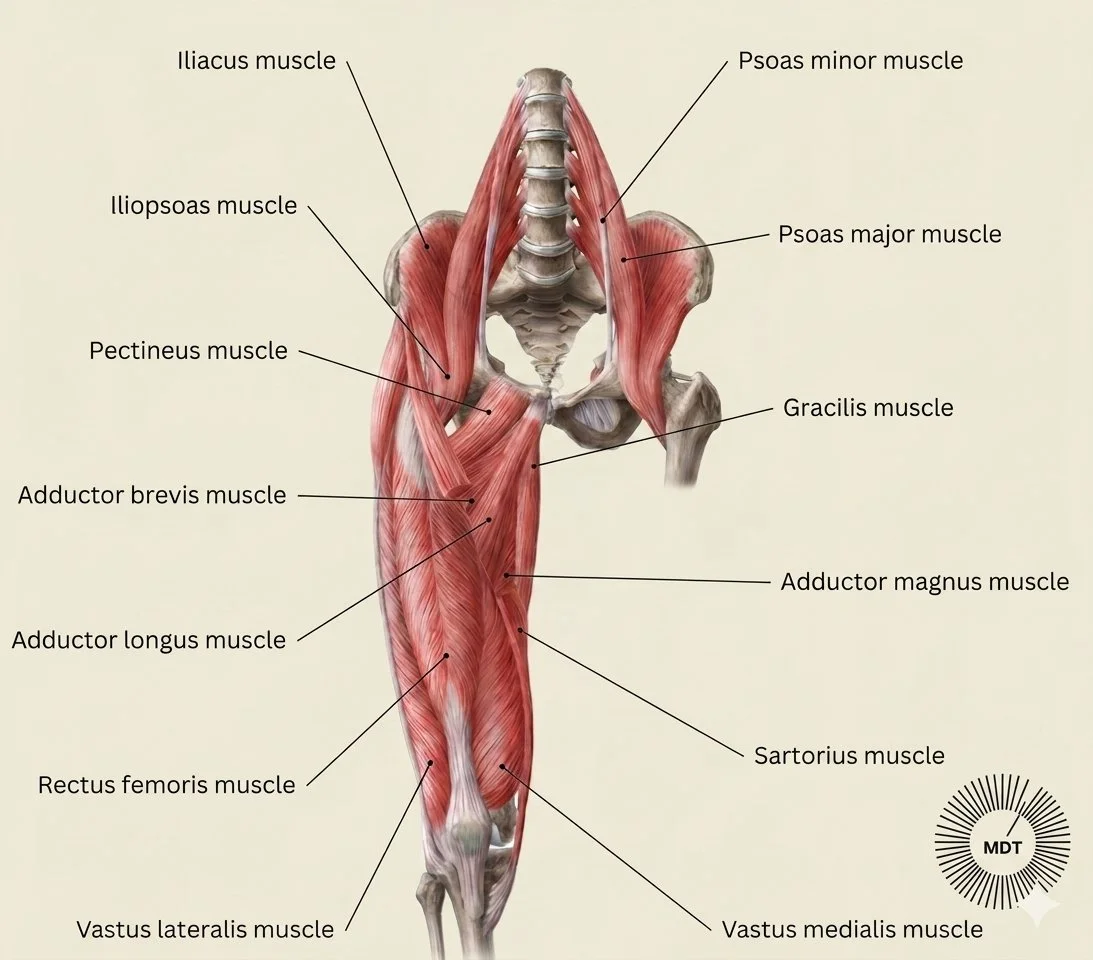
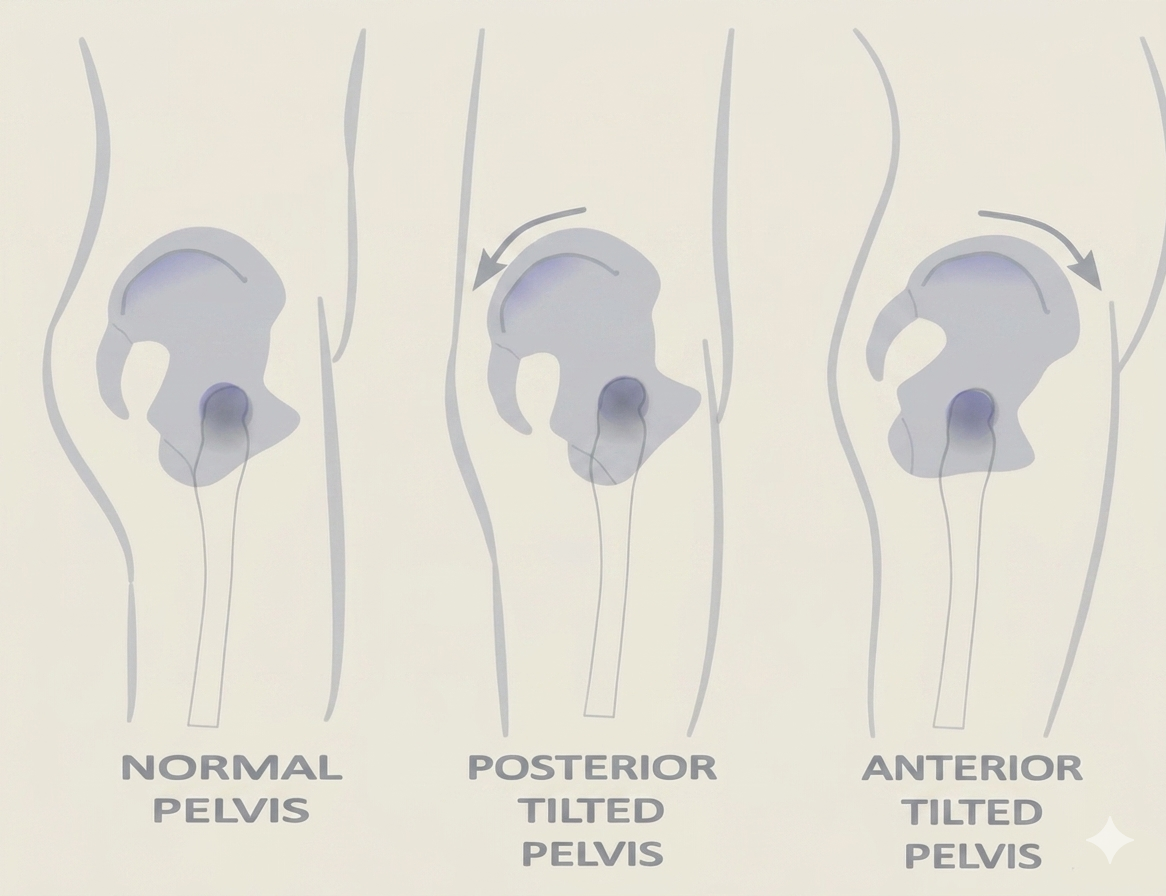
Pic 1. (generated with Gemini)
The Iliopsoas is much “beefier” than many people realize. At its largest point near the hip joint, the muscle-tendon unit measures approximately 141 mm (5.5 inches) in circumference and consists of roughly 82% muscle and 18% tendon. In other words, the iliopsoas is a powerful structure designed to generate movement rather than simply stabilize the hip.
So why should desk workers care?
Many of us spend hours each day sitting. This prolonged position places the hip flexors in a shortened state and, over time, may contribute to reduced hip extension range of motion and the familiar feeling of “tight hips.”
The good news is that regular movement and targeted hip flexor stretching can help maintain mobility and counter some of the effects of prolonged sitting.
Why hip flexors tighten from sitting
Sitting directly affects the Iliopsoas muscle, the primary hip flexor complex. As discussed earlier, the Iliopsoas consists of the Psoas Major and Iliacus muscles. A growing body of research suggests that prolonged sitting is associated with reduced hip flexibility and increased hip flexor tightness (1,2,3,4).
Research findings include:
Among professional desk workers, nearly 65% demonstrate significant hip flexor tightness.
People who sit for more than 7 hours per day and perform little physical activity have approximately 6.1° less hip extension than active individuals who sit less than 4 hours per day.
Higher body weight is associated with greater hip flexor tightness. In one study, workers in the obese category demonstrated substantially greater muscle tightness than those in lower weight categories.
Reduced hip mobility may alter movement patterns and increase the mechanical demands placed on the lower back during standing and walking.
Researchers suggest that the body may adapt to prolonged sitting in two primary ways. First, connective tissues such as collagen-rich structures may become stiffer and less elastic. Second, muscles may adapt by altering the number of sarcomeres - the basic contractile units of muscle - allowing them to function more efficiently at a shorter length.
The effects do not necessarily remain isolated to the hips. Because the hip flexors connect the spine, pelvis, and legs, excessive tightness may contribute to changes in pelvic and lumbar alignment when standing.
For example, tight hip flexors are often associated with anterior pelvic tilt (a forward rotation of the pelvis) and increased lumbar lordosis (an exaggerated arch in the lower back). These changes may increase mechanical stress on the lumbar spine and contribute to low-back discomfort in some individuals.
For this reason, many therapists and clinicians recommend combining hip mobility exercises, stretching, and strength training to help maintain normal movement patterns and improve coordination between the hips, pelvis, and spine.
Also check out our “Exercises for sitting all day, complete guide for desk workers”.
How often should you stretch your hip flexors, and what exercises work best?
Research provides strong evidence that stretching can improve hip flexor flexibility and reduce the sensation of hip tightness.
The overall strategy is surprisingly simple.
In a clinical trial (5) that successfully reduced hip flexor tightness, participants performed 2 sets of 30sec. holds per leg. The study focused on the immediate (acute) effects of a single stretching session to determine which technique was most effective.
The researchers reported that this duration was sufficient to produce immediate improvements in flexibility without causing excessive muscle fatigue.
However, the data suggest that how you stretch may be just as important as how often you stretch.
Let’s unpack that.
Adding a posterior pelvic tilt (often described as “tucking the tailbone”) during a 30sec. stretch was found to be significantly more effective than a traditional hip flexor stretch. The traditional version produced only small changes in muscle tension, while the posterior pelvic tilt variation resulted in a clinically meaningful improvement.
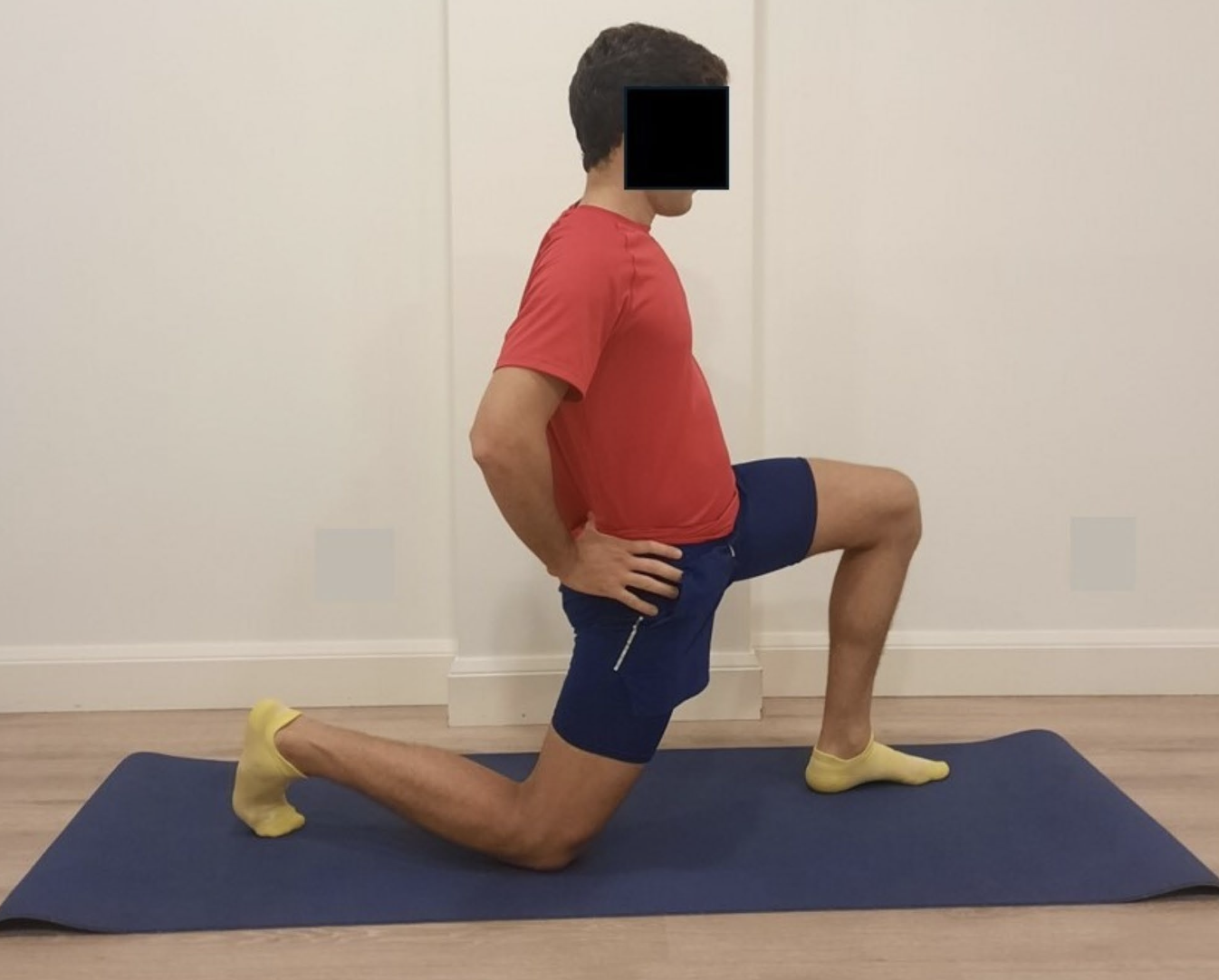
Participants assumed a half-kneeling position with one knee on the ground and the opposite foot placed forward. They were instructed to gently shift the pelvis forward while maintaining an upright posture. The goal was simply to feel a stretch in the front of the hip.
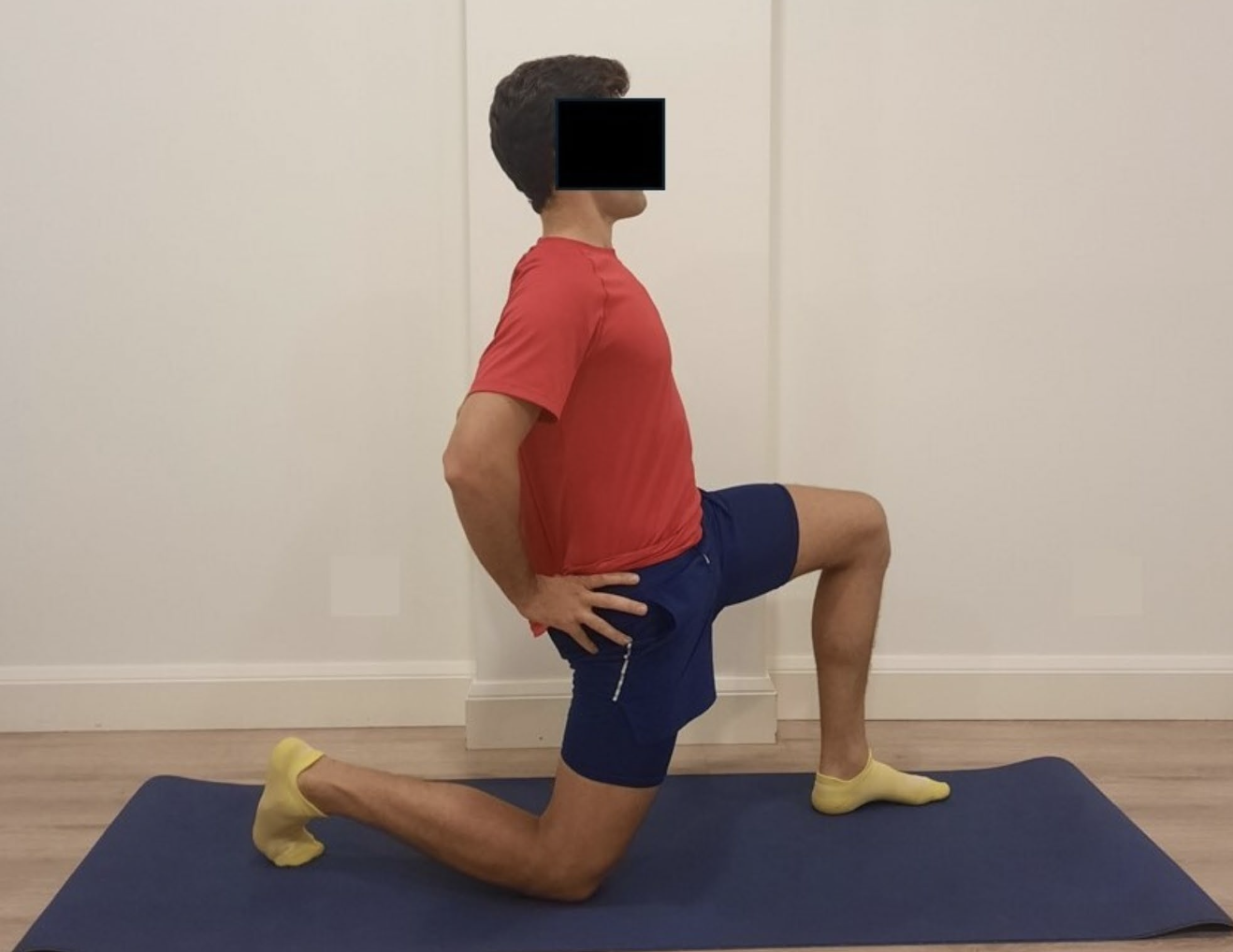
In the same half-kneeling position, participants actively engaged their abdominal and gluteal muscles to create a posterior pelvic tilt before moving the pelvis forward.
The researchers measured reactive hip flexor force, a marker used to estimate resistance within the hip flexor muscles during stretching. The PPTS (pelvic tuck) stretch produced significantly greater improvements than the standard stretch.
Why?
When performing a standard hip flexor stretch, many people unconsciously compensate by arching the lower back or tilting the pelvis forward. This can reduce the amount of stretch placed on the target muscles.
By actively tucking the pelvis under, the lumbar spine remains more neutral, which places greater stretch on the Iliopsoas and Rectus Femoris muscles rather than allowing the movement to come primarily from the lower back.
5 hip flexor stretches for people who sit all day
The practical takeaway is simple: before trying a more advanced stretch, first learn how to control your pelvic position.
Pic 2. (generated with Gemini)
How to make a Posterior Pelvic Tilt while standing?
Before starting the stretches below, practice the posterior pelvic tilt (PPT):
Stand upright with your feet approximately hip-width apart.
Keep your knees slightly bent rather than locked.
Gently tuck your pelvis under without excessively squeezing your glutes.
Avoid overdoing the movement. The goal is simply to learn how to move from a slightly arched lower back toward a more neutral or flattened position.
Once you understand this movement, try applying it during the following hip flexor stretches.
If a stretch causes pain, numbness, or discomfort beyond a mild stretching sensation, stop and choose a different variation.
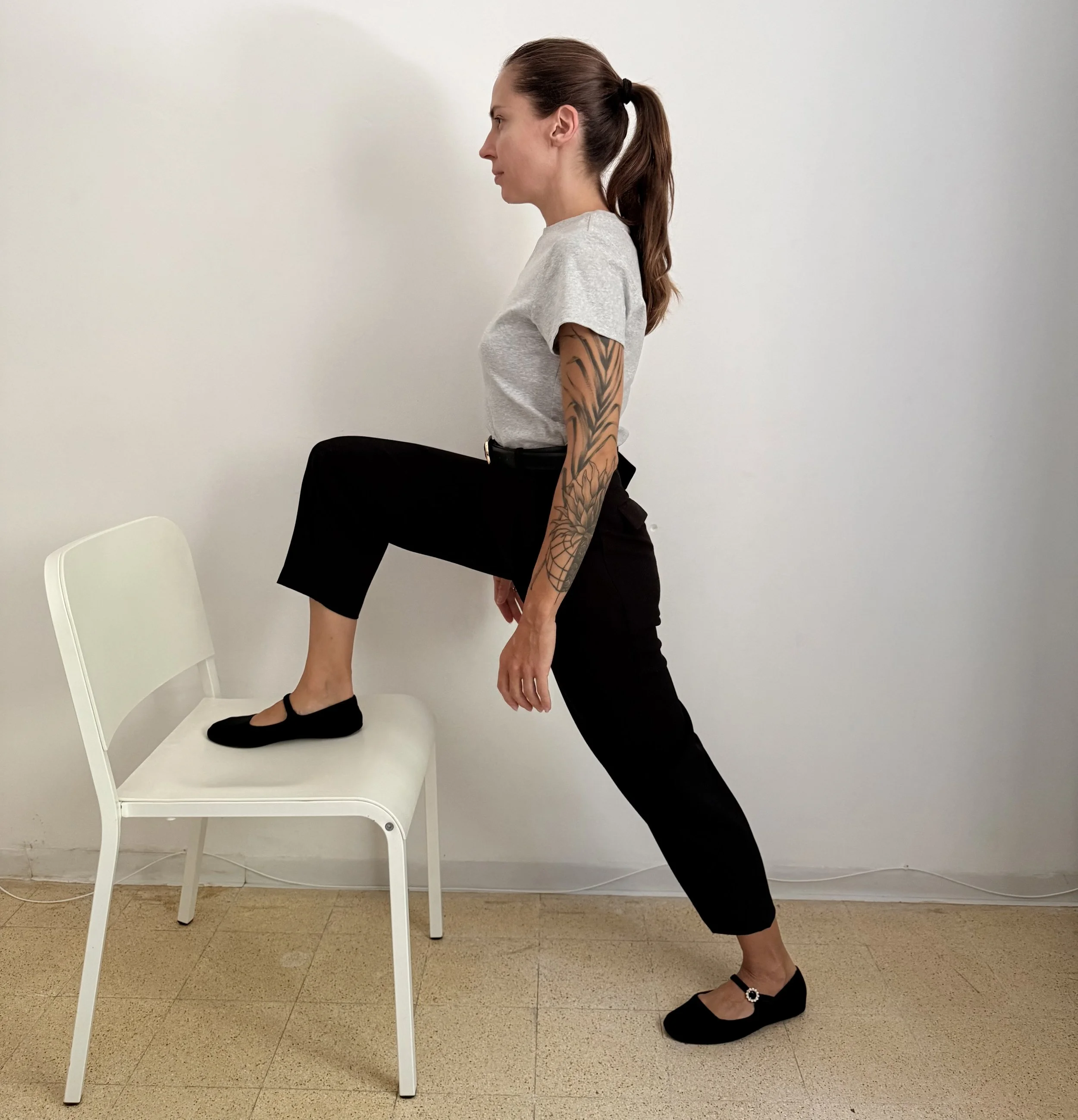
Standing hip flexor stretch
Stand tall.
Place one foot on a chair or elevated surface.
Slightly tuck the pelvis (PPT).
Keep the torso upright and lean slightly forward.
Hold for 30sec. per side.
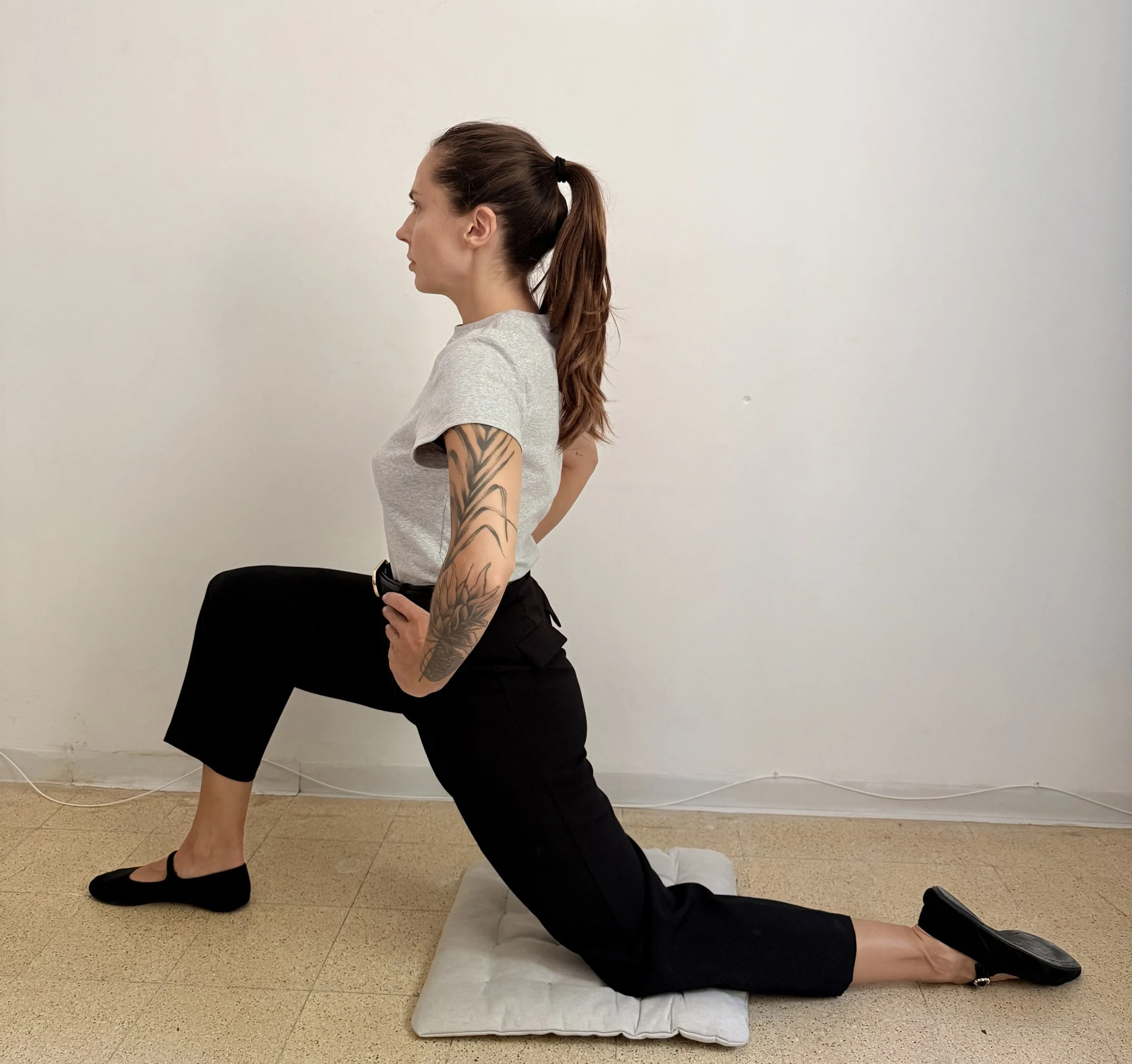
Half-kneeling hip flexor stretch
Place one knee on the floor and the opposite foot in front.
Gently shift your body forward.
Keep the ribs stacked over the hips.
Maintain a slight posterior pelvic tilt.
Hold for 30sec. per side.
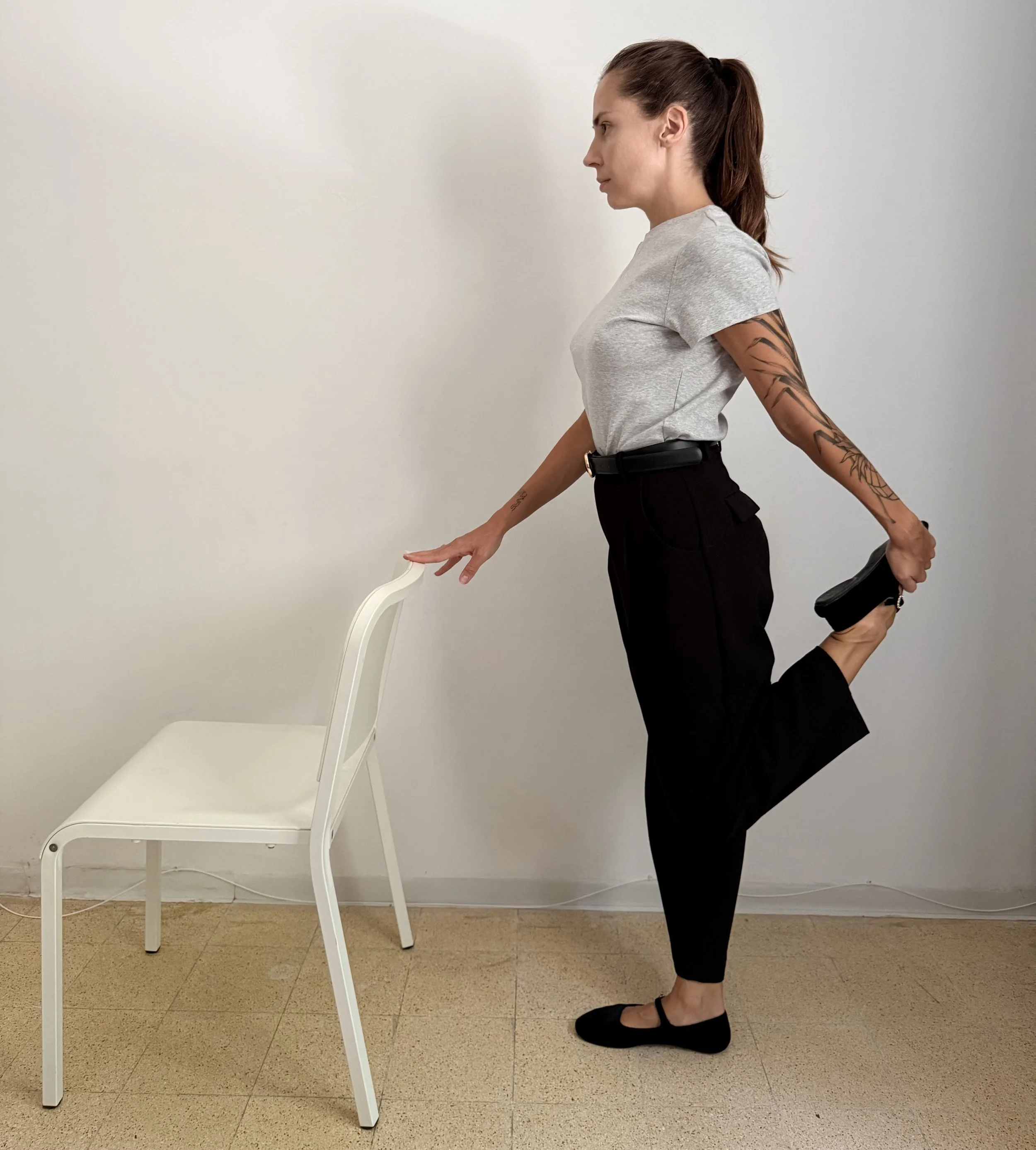
Standing quad and hip flexor stretch
Hold a wall or stable surface for balance.
Bend one knee and bring the heel toward the glute.
Keep both knees close together.
Gently tuck the pelvis (PPT).
Hold for 30sec. per side.
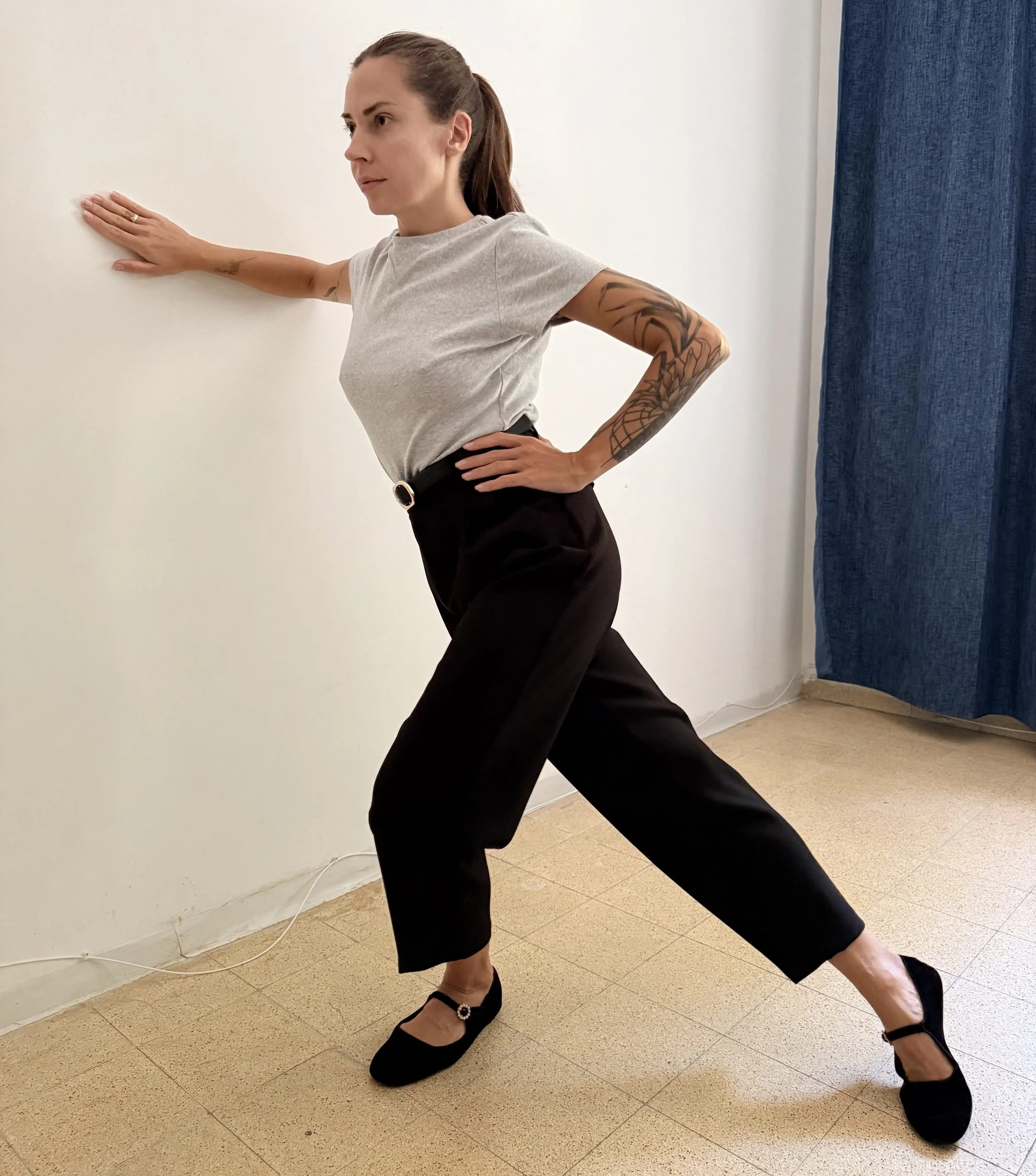
Hip stretch with a wall
Place your right forearm against a wall.
Cross your right leg behind your left leg.
Slightly bend the front leg.
Shift your hips toward the wall.
Hold for 30sec. per side.
Chair-assisted stretch
Place one knee on a chair.
Position the opposite foot forward.
Gently tuck the pelvis (PPT).
Keep the torso upright.
Shift forward until you feel a stretch in the front of the hip.
Hold for 30sec. per side.
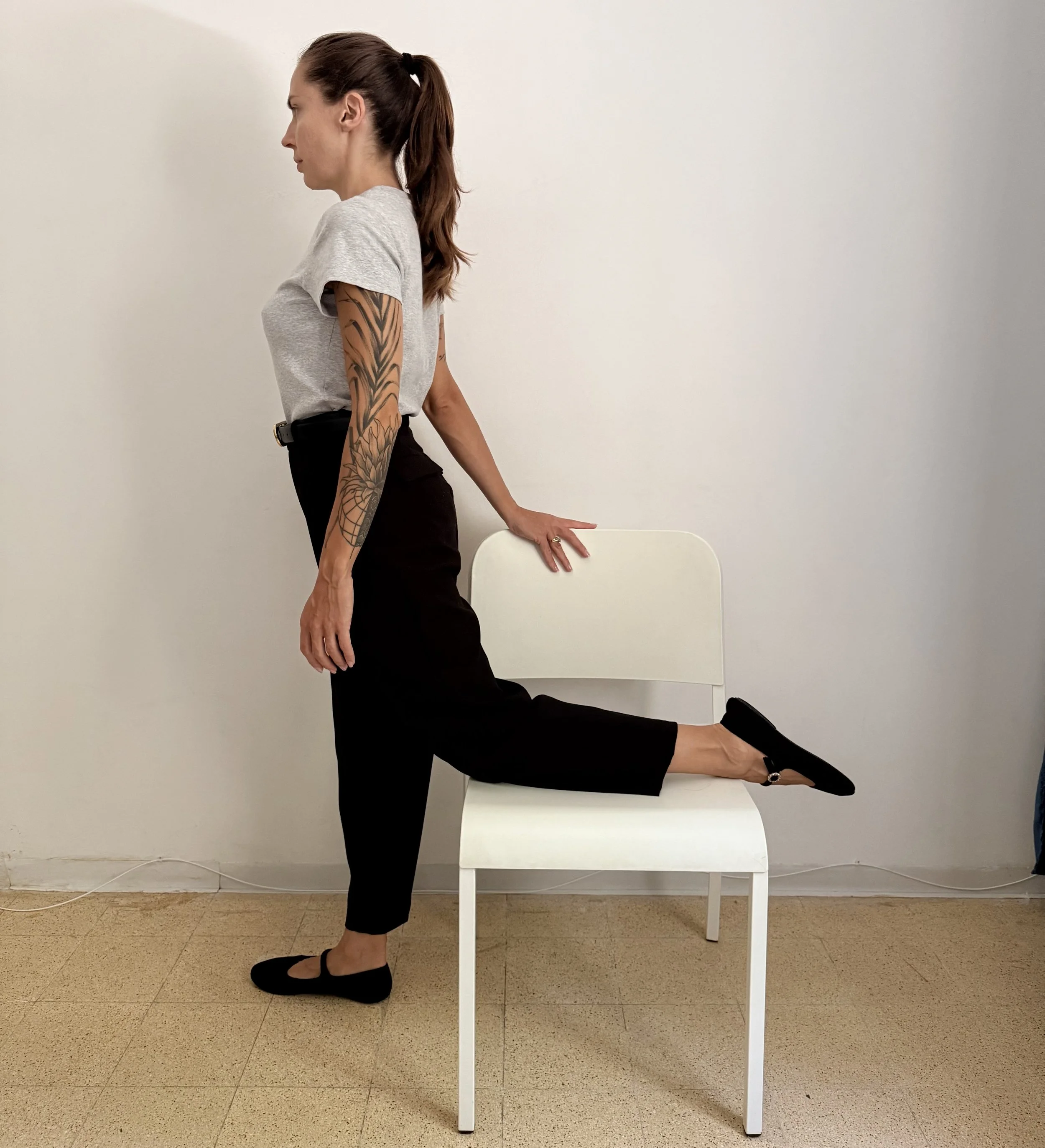
Most people will feel these stretches in the front of the hip, upper thigh, or groin region. The sensation should feel like gentle tension rather than pain.
Common mistakes to avoid
Arching the lower back
This is the most common error. Instead of lengthening the hip flexors, many people compensate by arching the lumbar spine and pushing the pelvis forward (anterior pelvic tilt). This can create the sensation of a stretch without placing the target muscles under meaningful tension.
A gentle posterior pelvic tilt (PPT) can help keep the lower back in a more neutral position and improve the effectiveness of the stretch.
Pushing too hard
Stretching should create a mild to moderate sensation of tension, not pain.
Forcing the movement or aggressively pushing deeper into the stretch may increase discomfort without producing better results. In most cases, a controlled and comfortable stretch is more effective than an aggressive one.
Inconsistent practice
Most improvements in flexibility occur through regular exposure over time rather than occasional long stretching sessions.
A few minutes of stretching performed consistently each week will usually produce better results than a single long session performed once in a while.
Perfect stretch
There is no single best hip flexor stretch. The exercise that you can perform comfortably and consistently is usually more valuable than constantly searching for a more advanced variation. The most effective stretch is often the one you are willing to do regularly.
When hip tightness might need professional help
Most cases of hip tightness related to prolonged sitting can be improved with regular movement, stretching, and strength training.
However, persistent symptoms may require assessment by a healthcare professional.
Consider seeking professional advice if you experience:
Hip or groin pain that persists for several weeks
Pain that worsens during walking, standing, or exercise
Sharp, radiating, or shooting pain into the leg
Numbness, tingling, or weakness
Significant loss of hip mobility that does not improve with exercise
Hip pain following a fall or injury
Night pain that regularly disrupts sleep
It’s important to remember that not all hip discomfort originates from the hip flexors. Conditions affecting the hip joint, lower back, nerves, or surrounding tissues can sometimes produce similar symptoms.
Most cases of sitting-related hip tightness improve with movement and exercise. However, if symptoms persist despite regular stretching and activity, a qualified healthcare professional can help identify the underlying cause and recommend appropriate treatment.
FAQ
-
There is no single “best” stretch for everyone, but the half-kneeling hip flexor stretch and standing hip flexor stretch are excellent starting points. To increase effectiveness, gently perform a posterior pelvic tilt (tuck the pelvis under) during the stretch. This helps target the hip flexors more directly and reduces compensation from the lower back.
-
A reasonable starting point is 30 seconds per side. Research on hip flexor stretching has shown benefits using 2 sets of 30sec. holds. The goal is to feel mild to moderate tension, not pain. Consistency is generally more important than holding stretches for very long periods.
-
There is no single ideal frequency, but research suggests that hip flexor stretching can be effective when performed regularly. For desk workers, a practical approach is to combine dedicated stretching sessions several times per week with frequent movement breaks throughout the day to reduce prolonged sitting.
-
Tight or restricted hip flexors may contribute to low-back discomfort in some people by influencing pelvic and spinal mechanics. However, back pain is complex and can have many causes. Hip tightness should be viewed as one potential factor rather than the sole cause. If pain persists, seek advice from a qualified healthcare professional.
-
Yes. Many hip flexor stretches can be performed in an office environment without special equipment. Standing hip flexor stretches, desk-supported lunges, and standing mobility exercises can usually be done beside a desk during a short movement break.
-
Hip flexor stretches can help improve flexibility and reduce the feeling of tightness, but they are only one part of the solution. For best results, combine stretching with regular movement breaks, walking, strength training, and other forms of physical activity throughout the day.
For the complete guide to managing the effects of sitting all day including range of motion, desk exercises, and leg stretches see our “Exercises for sitting all day pillar guide”
-
Regular gym workouts do not completely offset long periods of sitting. Many people exercise for an hour and then remain seated for much of the rest of the day. Tight hip flexors can develop from prolonged sitting, reduced movement variety, and individual mobility limitations, even in physically active people.
Hip flexor stretches work best when combined with regular movement throughout the day. The MicroDosing Training program gives you a structured 30-day routine 1-minute sessions, 5 times a day, delivered to your inbox. Create your 30-day plan here.
References:
Aali, S., Rezazadeh, F., et al.(2025): Altered lower extremity muscle activity patterns due to Iliopsoas tightness during single-leg landing.
Nishimura, T., Tanaka, M., et al. (2025): Differences in Lumbar–Pelvic Rhythm Between Sedentary Office Workers with and Without Low Back Pain.
Zope, D. S., & Patil, D. S., et al. (2025): Prevalence Of Iliopsoas Muscle Tightness In Prolonged Desk Job Workers Within The BMI Subgroups.
Boukabache, A., Preece., et al. (2021): Prolonged sitting and physical inactivity are associated with limited hip extension.
González-de-la-Flor., et al. (2024): Comparison of two different stretching strategies to improve hip extension mobility in healthy and active adults.
Gómez-Hoyos., et al. (2020): Iliopsoas Muscle/Tendon Proportions at Three Levels of Described Arthroscopic Tenotomy.
Read more posts: