Exercises for sitting all day: the complete guide for desk workers

Sitting all day has become a normal part of modern work. Whether you’re answering emails, attending meetings, coding, writing, designing, or managing projects, it’s easy to spend hours in the same position without realizing it. The problem isn’t simply sitting.
The problem is staying in the same posture for long periods without enough movement. Over time, prolonged sitting can contribute to stiffness, muscular discomfort, reduced mobility, lower energy levels, and more.
This guide explains why that happens and what you can do about it
You’ll find practical desk-friendly exercises, stretches, and movement breaks for your hips, legs, back, shoulders, neck, and overall mobility. Most can be performed in about a minute, without changing clothes, using equipment, or leaving your workspace. These short movement sessions sometimes called exercise snacks - are the foundation of the MicroDosing Training. The goal is not to turn your office into a gym. The goal is to help you interrupt long periods of inactivity and bring more movement into your day. The approach presented here is based on principles from ergonomics, exercise science, and human physiology. Instead of relying solely on a workout before or after work, it focuses on distributing small amounts of movement throughout the day.

What sitting all day can do to your body
Most adults now spend between 8 and 12 hours each day in a seated position. While it may feel like you’re simply resting, your body enters a state that some researchers describe as “muscular inactivity” or "biological muscle silence". Learn what happens to your muscles when you sit all day.
The silent engine
The moment you sit down, the large muscles of your lower body, particularly the glutes, quadriceps, and hamstrings become far less active.
In people with sedentary lifestyles, leg muscles may remain inactive for up to 80% of waking hours.
This matters because these muscles play a major role in regulating blood sugar and fat metabolism. When muscle activity drops, blood glucose can rise more rapidly after meals, while the body’s ability to clear fats from the bloodstream becomes less efficient.
The "bent-artery" effect
Sitting for prolonged periods places the hips and knees in a flexed position, often close to 90 degrees.
Researchers have suggested that this posture may contribute to what is sometimes called a “bent-artery” morphology, particularly in the lower limbs. Reduced blood flow and altered vascular function may increase arterial stiffness and contribute to elevated blood pressure over time.
The effects may extend beyond the legs. Studies have reported reductions in cerebral (brain) blood flow velocity of approximately 3–6% during prolonged sitting, which may contribute to feelings of mental fatigue, reduced concentration, and the familiar afternoon “brain fog.”
If your main issue is a general feeling of tightness or tension, start with our guide to muscle tension from sitting at a desk. It covers 7 simple exercises you can try for the neck, shoulders, back, hips, and legs.
Metabolic adaptation
Perhaps more surprisingly, prolonged inactivity may influence the metabolic characteristics of skeletal muscle.
Research suggests that extended periods of inactivity can shift muscle function away from oxidative (Type I), fat-utilizing pathways toward greater reliance on glycolytic (Type II) pathways.
In practical terms, this means the body may become less efficient at using fat as a fuel source and more dependent on glucose for energy.
The "sedentary exerciser" paradox
One of the most important findings from recent research is that a daily workout does not completely offset the effects of prolonged sitting. You can spend an hour at the gym performing moderate-to-vigorous physical activity (MVPA) and still accumulate excessive sedentary time during the remaining hours of the day.
Researchers sometimes refer to this phenomenon as the "sedentary exerciser".
For this reason, many experts now recommend regularly interrupting sitting time throughout the day. Even brief activity breaks such as standing up or walking for a couple of minutes every 30 minutes may help support metabolic, vascular, and cognitive function.
Scientific references:
Pinto et al., (2023): Physiology of Sedentary Behavior.
Vanherle et al., (2026): Optimizing Physical Activity Bouts to Interrupt Sedentary Behaviour.
Pesola et al., (2025): Silence of the Muscles: Wearable EMG and Sitting.
Zhang et al., (2026): The Impact of Frequent Interruptions on Postprandial Metabolism.
Le Roux et al., (2022): Physiology of Physical Inactivity.
Hip flexors: why they often feel tight after sitting
The hip flexors are a group of muscles responsible for lifting the thigh toward the torso. Walking upstairs, climbing a hill, marching, or kicking a ball are all examples of movements that rely on these muscles.
So where does the problem begin?
In one study (Zope & Patil, 2025), researchers examined 209 bank employees who worked at a desk for at least 8 hours per day and had been in that role for a minimum of 5 years.
The results were striking:
64.59% of participants demonstrated significant hip flexor tightness.
Higher body weight was associated with a greater likelihood and severity of tightness.
Tightness was almost identical on both the left and right sides, suggesting that prolonged sitting affects both hips similarly.
The "sitting penalty"
In another study, researchers assessed 98 adults using the Thomas Test, a common clinical assessment used to evaluate hip flexor flexibility and hip extension range of motion.
Participants were divided into three groups:
Group 1: Low physical activity and high sitting time (more than 7 hours)
Group 2: High physical activity and low sitting time (less than 4 hours)
Group 3: High physical activity but also high sitting time
What did they find?
People who sat for long periods and performed little physical activity (Group 1) had 6.1° less hip extension than the active, low-sitting group (Group 2).
More importantly, the study found a significant relationship between sitting time and hip flexibility: the more time a person spent sitting during the day, the less their hips were able to extend.

Why the muscles change
When you sit, your hip flexors remain in a shortened position for extended periods. Research suggests that the body may adapt to this posture through two primary mechanisms:
Passive Stiffness: The connective tissues within and around the muscle (such as collagen-rich structures) may become less elastic and more resistant to stretching.
Muscle Shortening: The muscle may adapt by reducing the number of sarcomeres, the basic contractile units of muscle allowing it to function more efficiently at a shorter length.
Over time, these adaptations can reduce hip extension range of motion and contribute to the sensation of “tight hips” commonly reported by desk workers. They may also influence pelvic and lumbar alignment, increasing mechanical stress on the lower back. This is one reason prolonged sitting is often associated with low-back discomfort.
A simple way to summarize the relationship is:
More sitting + less physical activity = reduced hip extension range of motion = greater stiffness and shortening of the hip flexor tissues.
For a deeper routine, read our guide: “Hip flexor stretches for sitting all day, with 5 simple moves for desk workers”.
Scientific references:
Boukabache et al., (2021): Prolonged sitting and physical inactivity are associated with limited hip extension: A cross-sectional study.
Range of motion exercises you can do at your desk
Range of motion (ROM) refers to the ability of a joint to move through its normal movement path.
Examples include rotating the shoulders, turning the upper back, circling the ankles, or opening the hips. ROM is commonly used to assess joint function and is an important indicator of musculoskeletal health.
For example, a healthy shoulder joint can typically move overhead through approximately 180° of flexion.
Range of motion varies depending on age, physical activity level, injury history, and health status. However, restrictions in movement are often associated with muscle tightness, joint stiffness, or prolonged exposure to the same posture.
Research suggests that prolonged desk work may contribute to reduced movement variety and increased stiffness not only in the hips, but also in the neck, shoulders, and spine.
Range-of-motion exercises are not strength training. Their primary goal is to move joints through comfortable ranges, maintain mobility, reduce stiffness, and support flexibility.
Desk range of motion routine based on the evidence
Systematic reviews and randomized controlled trials suggest that stretching, mobility exercises, and regular movement breaks can help reduce neck, shoulder, and low-back discomfort in office workers.
The good news is that many effective ROM exercises can be performed directly at your desk, whether you’re working from home or in the office.
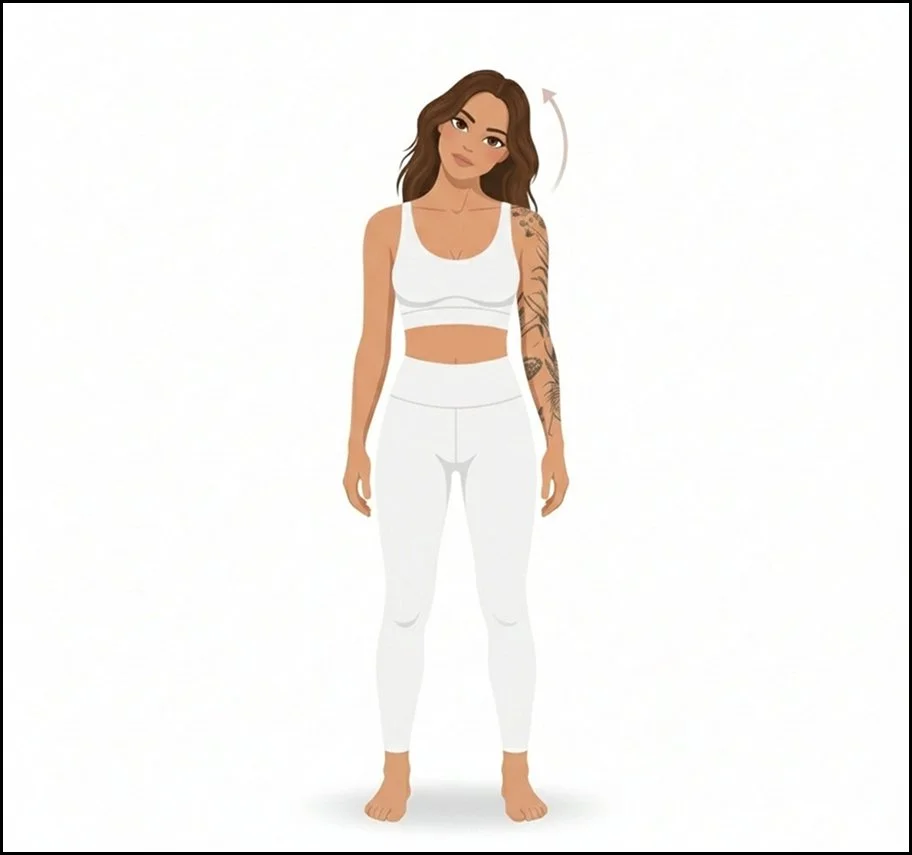
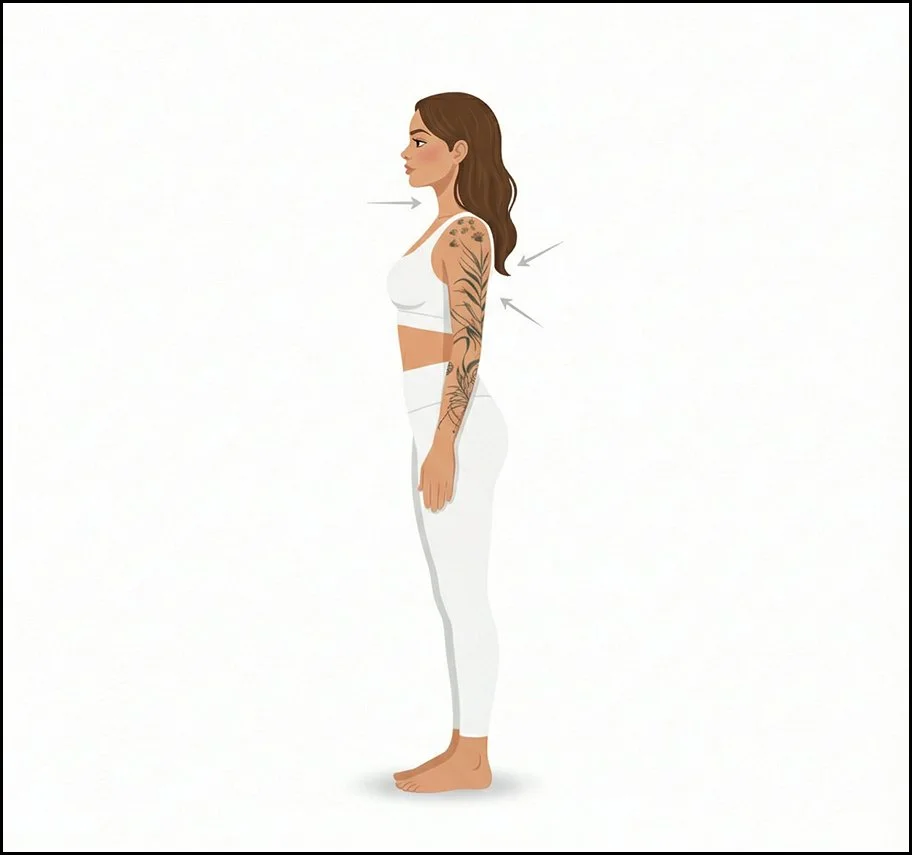
1. Neck rotations
Turn head left and right slowly
(5-8 reps each side).
2. Shoulder rolls + scapular squeezes
Roll shoulders backward 10 times, then squeeze shoulder blades together for 5 seconds (5 reps).
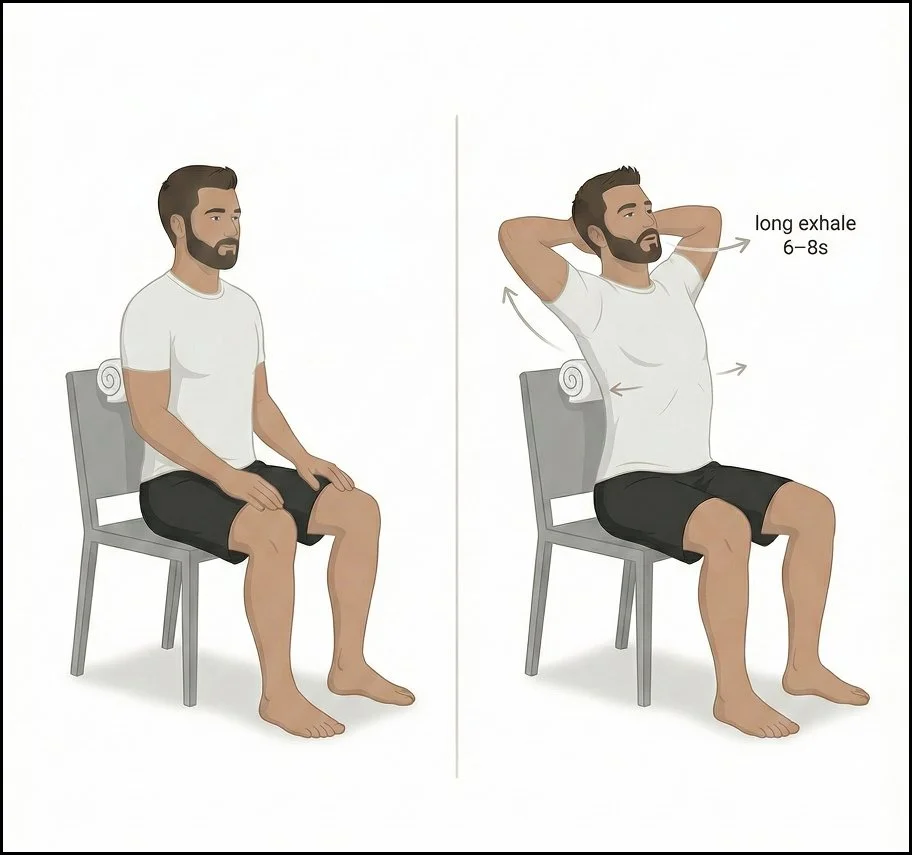
3. Thoracic extension over chair
Hands behind head, gently arch upper back over chair (5–8 slow reps).
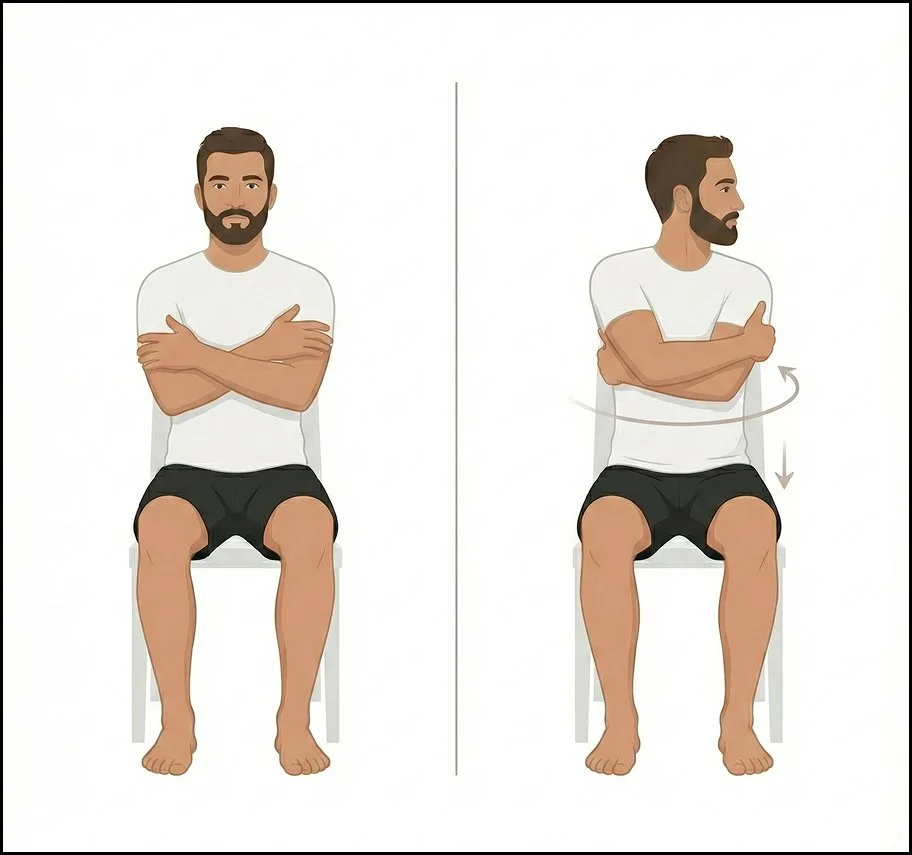
4. Seated trunk rotations
Sit tall and rotate left/right (5 reps per side).
These exercises work especially well as 1-minute movement breaks because they are quick, quiet, and easy to perform between meetings, calls, or focused work sessions.
Rather than waiting for stiffness to build up, you can use small doses of movement throughout the day to maintain mobility, reduce sedentary time, and keep your body moving more naturally.
For a complete desk mobility routine including a self-assessment and 6 exercises organized into 60 sec. blocks see our full guide: “Range of motion exercises for sitting all day: a 1-minute desk routine”.
Scientific references:
Shariat et al., (2018): *Effects of stretching exercise training and ergonomic modifications on musculoskeletal discomforts of office workers.*
Tersa-Miralles et al., (2022): Effectiveness of workplace exercise interventions in the treatment of musculoskeletal disorders in office workers.
Fraeulin et al., (2021): A device-based stretch training for office workers resulted in increased range of motion especially at limited baseline flexibility.
Neck stretches for desk workers
The neck is one of the first areas to become uncomfortable during prolonged desk work. While the rest of the body may appear relaxed, the muscles around the neck and shoulders remain lightly active for hours, supporting the weight of the head while your eyes stay fixed on a screen.
Unlike muscles that repeatedly contract and relax during walking or exercise, these postural muscles spend much of the workday generating small amounts of continuous force. Over time, this static loading can contribute to fatigue, stiffness, and the familiar feeling of tension many desk workers experience.
Mental workload can make this even more noticeable. Research shows that concentrating, working under time pressure, or performing highly precise computer tasks can increase muscle activity around the neck and shoulders, even when your posture doesn’t change.
For this reason, maintaining neck comfort isn’t just about finding the “perfect” sitting posture. Regular movement, gentle mobility exercises, and occasional stretching help introduce movement variety and reduce the amount of time these muscles remain continuously active.
Looking for a practical routine? Read our guide: “Neck stretches for desk workers: 4 evidence-based exercises.”
Desk exercises that take 1–5 minutes
On the other hand, desk-based movement breaks provide a practical middle ground between “just stretching” and “doing a full workout.”
Unlike ROM exercises, these activities can move you into the light- to moderate-intensity range. On a perceived exertion scale from 0 to 10, they typically fall around 5–6, producing noticeable increases in breathing and heart rate.
The key is to keep the barrier low.
There is no need to change clothes, sweat heavily, or clear a large training space. Most exercises can be performed in a typical work environment with minimal disruption.
Distributing short activity breaks throughout the day, for example, one minute of movement five times per day - creates enough opportunity to combine light strength work, mobility, and whole-body movement patterns.
Working from home often provides even more options. Depending on the available space, you can include floor-based exercises in prone or supine positions and use a wider variety of movement patterns.
Office environments may be more restrictive due to space limitations, workplace culture, or professional etiquette. Even so, a desk, a chair, and a wall are often all you need to create an effective movement break.
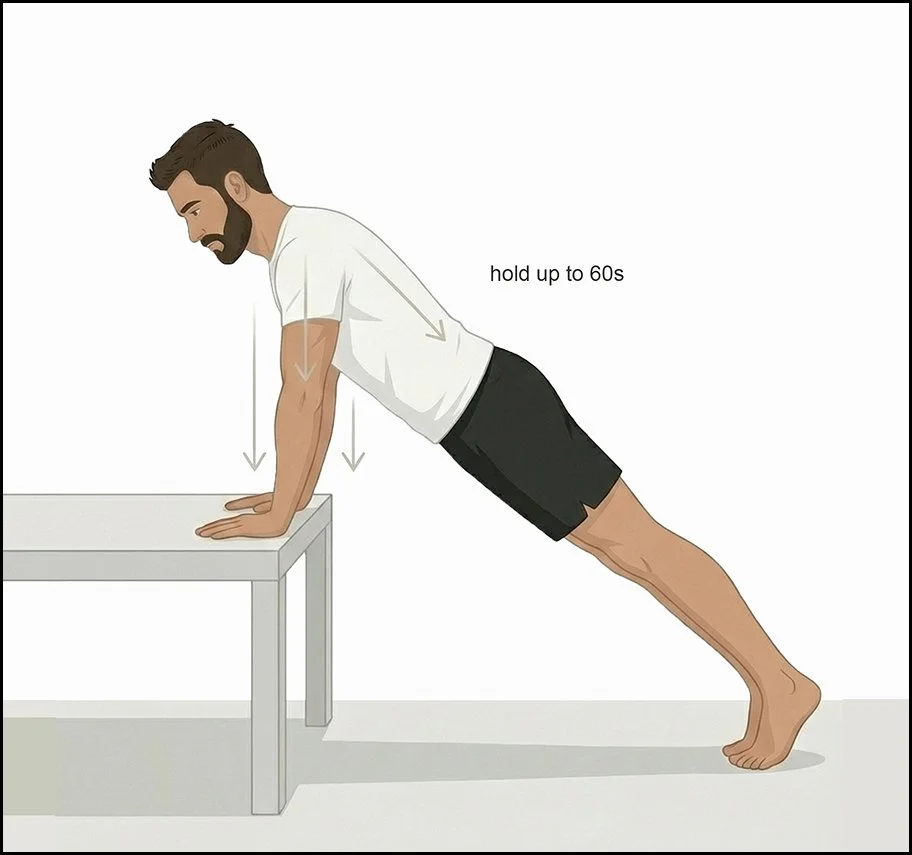
1. Desk push-ups
Place your hands on the edge of a sturdy desk, step your feet back, lower your chest toward the desk. Push back up with control.
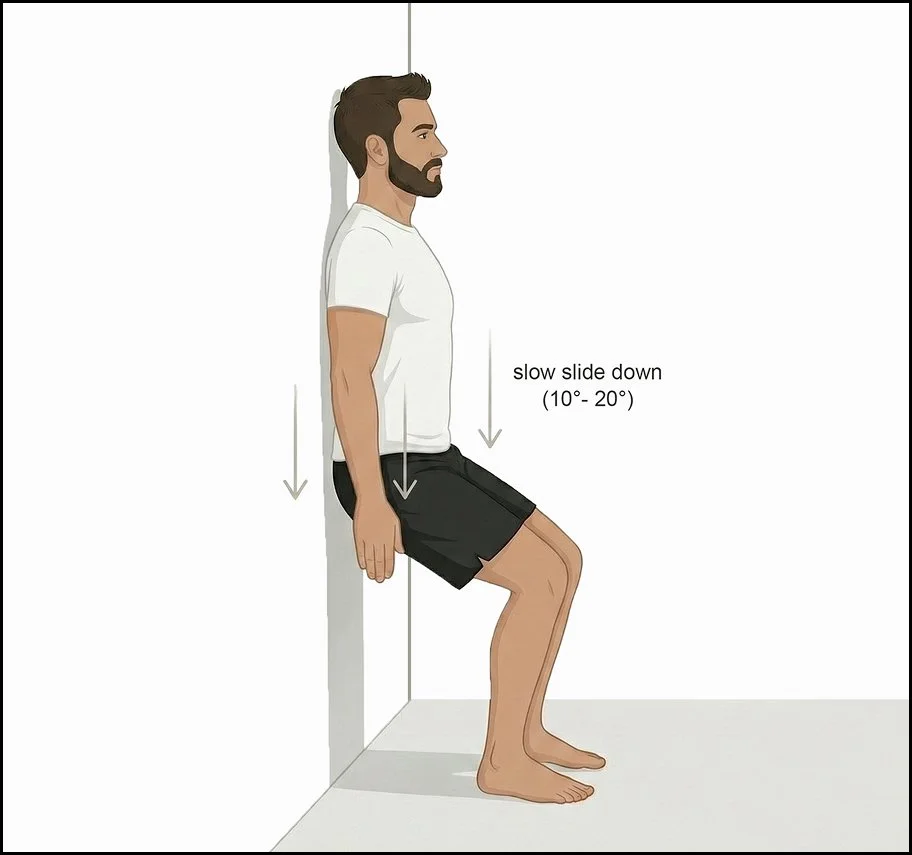
2. Wall squat
Stand with your back against a wall and slide down slightly into a comfortable squat position. Hold briefly, then stand back up. Smooth and controlled.
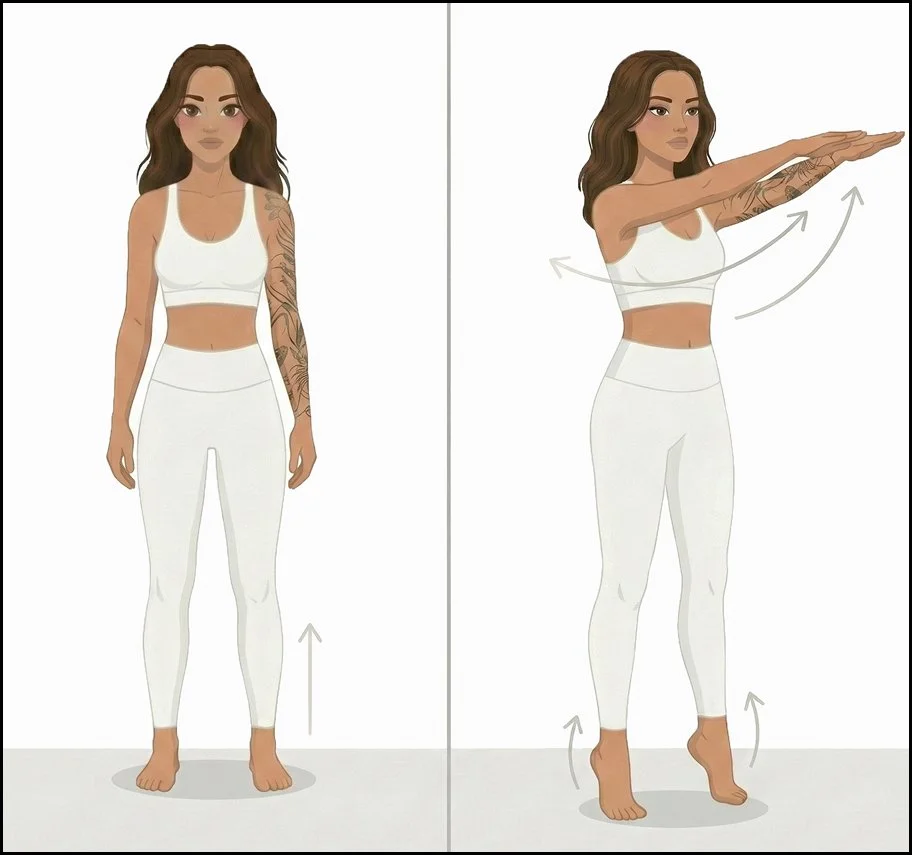
3. Calf raises
Stand tall beside your desk or chair, rise onto your toes, pause for a moment, then lower your heels back down. This is quick, quiet, and easy to repeat.
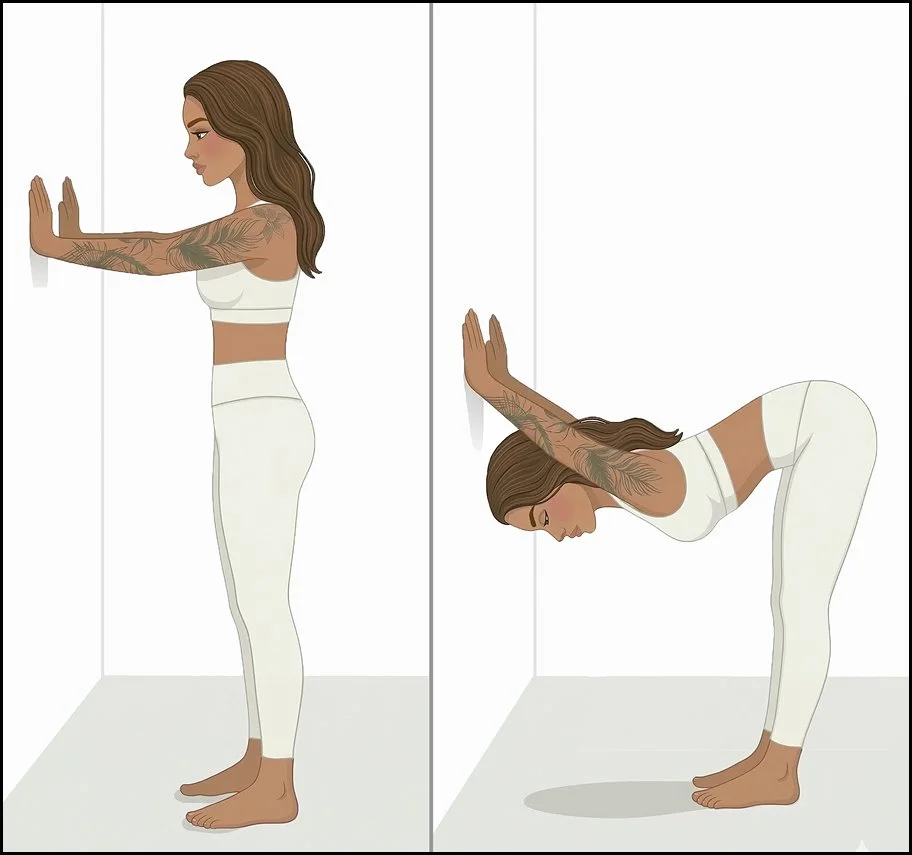
4. The wall hinge
Stand facing a wall or with your back near a wall. Push your hips back while keeping your spine long, then return to standing.
Leg stretches for the people who sit all day
Most of us know the feeling of standing up after a long day at the desk and noticing stiffness in the hips, legs, back, or shoulders.
The good news is that you don’t need to sacrifice hours of productivity to support your mobility and physical well-being during the workday.
The next category we will review is stretching exercises.
The primary goal of stretching is to lengthen a muscle or muscle group. Over time, regular stretching may improve flexibility and increase tissue elasticity - the ability of a muscle-tendon unit to lengthen and return to its original resting length.
Stretching can be performed in two main ways:
Static stretching - holding a position for a period of time.
Dynamic stretching - moving repeatedly through a comfortable range of motion, such as leg swings or arm circles.
Research suggests that workplace stretching programs may help reduce the risk of musculoskeletal disorders (MSDs), a broad category of conditions affecting muscles, tendons, ligaments, joints, and nerves.
MSDs are a major global health concern, with studies estimating that approximately 80 84% of people will experience a musculoskeletal complaint at some point in their lives.
How stretching actually works
Muscle-tendon units behave somewhat like elastic materials.
Regular stretching may reduce tissue stiffness and improve the ability of muscles and connective tissues to tolerate movement and mechanical stress. This can decrease the tension placed on the body during repetitive work tasks and prolonged postures.
Research has also shown that short stretching breaks can be more effective than passive rest for reducing discomfort and eyestrain among computer users, without negatively affecting productivity.
For workplace stretching programs, researchers commonly recommend the following guidelines:
Perform a light up to 5-minute warm-up before stretching.
Stretch at least 2–3 days per week.
Hold each stretch for 15–30 seconds.
Perform 2–3 repetitions for each muscle group.
Prioritize stretches that target the muscles and movement patterns most affected by your work.
The following stretches target some of the areas most commonly affected by prolonged sitting: the hamstrings, hips, and hip flexors.
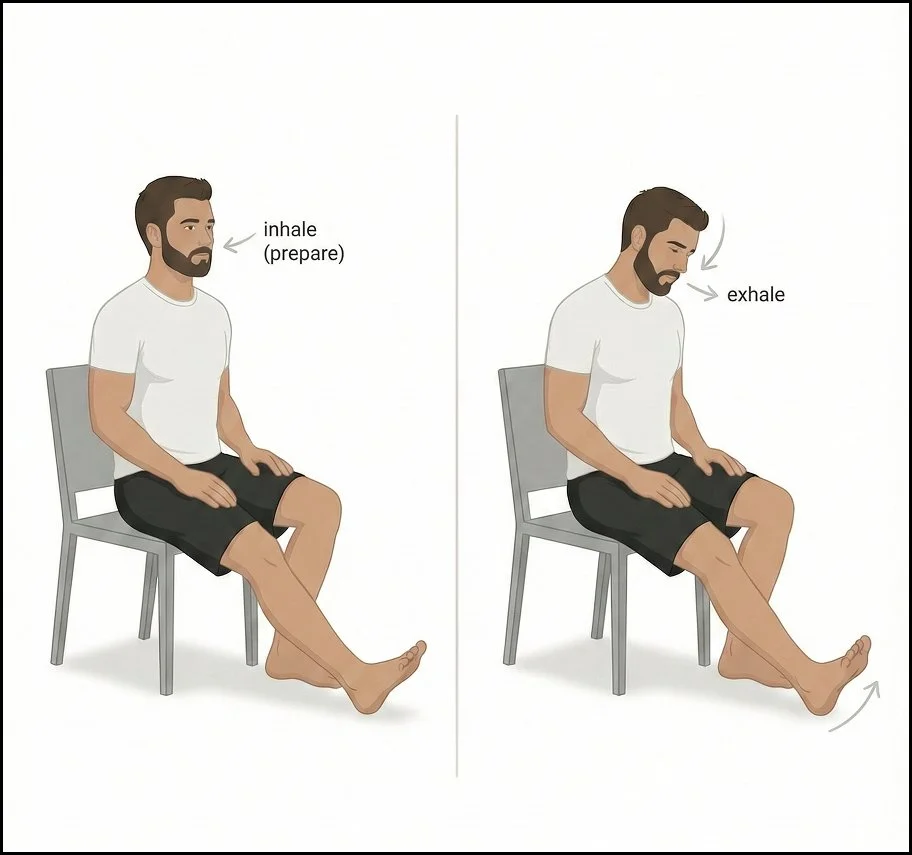
1. Seated hamstring stretch
Targets the hamstrings at the back of the thigh.
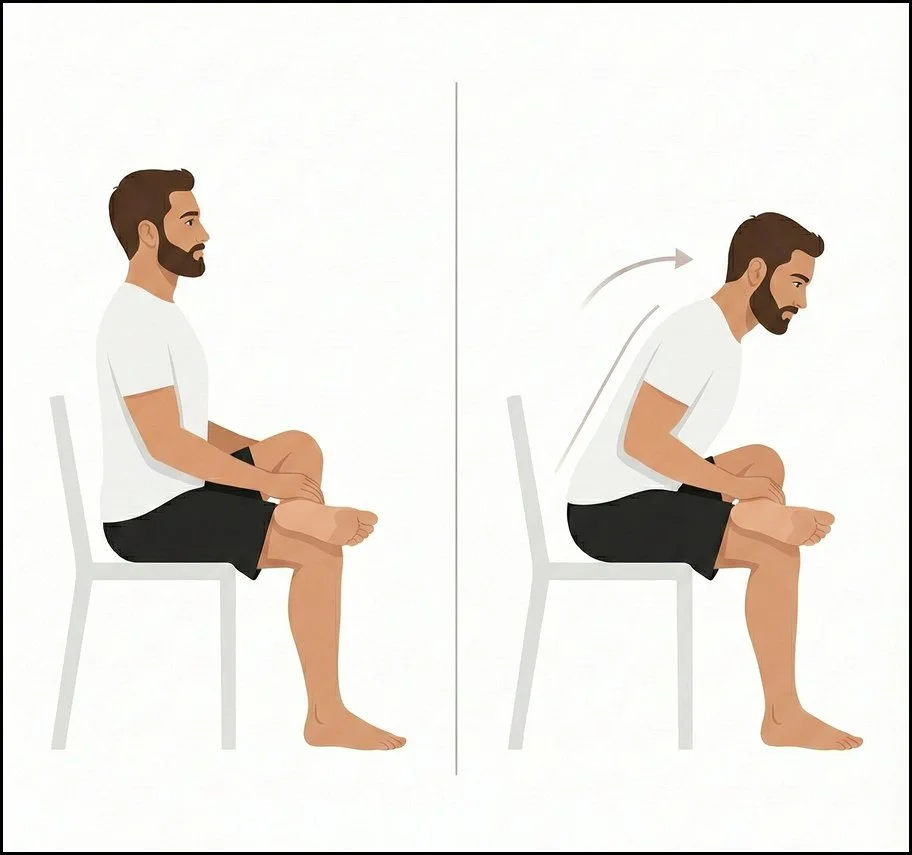
2. Seated figure-4 hip opener
Targets the glutes and deep hip muscles while encouraging external hip rotation.
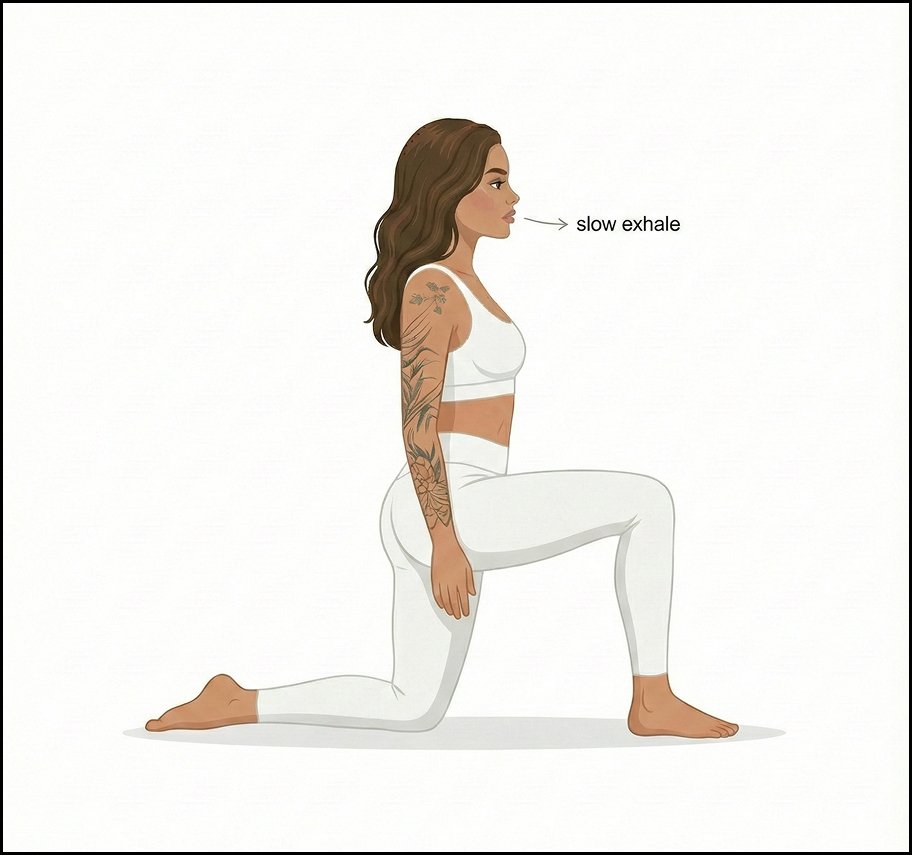
3. Kneeling hip flexor stretch
Targets the hamstrings at the back of the thigh.
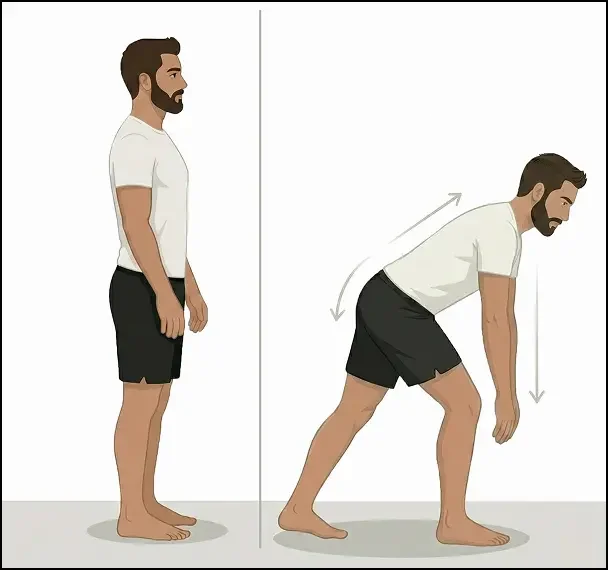
4. Step back hamstring stretch
Step one foot back and hinge forward, gentle stretch the front hamstring.
Scientific references:
Qais G et al., (2017): Stretching Exercises to Prevent Work-related Musculoskeletal Disorders.
How often should you do these exercises?
Research supports short movement breaks as an effective ergonomic strategy for desk workers.
A systematic review by Waongenngarm et al. (2018) found that movement breaks can reduce low-back discomfort in office workers, without clear evidence of negatively affecting productivity.
Practical workplace guidance from Buckley et al. (2015) recommends accumulating at least 2 hours per workday of standing and light activity, gradually progressing toward 4 hours.
A simple evidence-informed recommendation is to interrupt sitting every 30 minutes with 1–3 minutes of light movement, such as standing, walking, sit-to-stands, or desk mobility exercises.
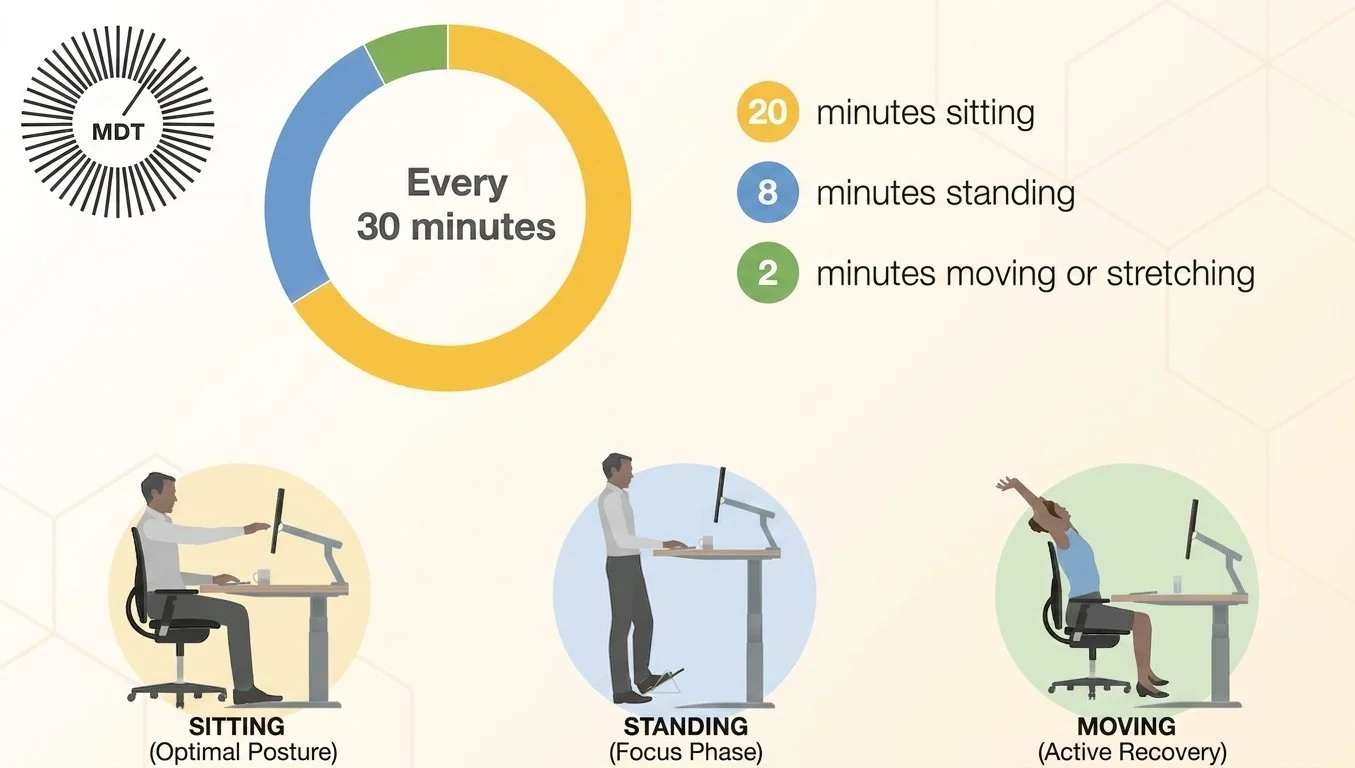
One well-known framework, developed by researchers at Cornell University and often referred to as Hedge’s 3S’s Ideal Work Pattern, divides every 30 minutes of desk work into:
20 minutes of sitting in a neutral posture.
8 minutes of standing in a neutral posture.
2 minutes of moving or gently stretching
See our complete guide: Movement breaks at work: a 1-minute system for desk workers.
Pic 1. (generated with Gemini)
The common message across these recommendations is simple:
Move more often and sit for shorter periods.
We believe you can take this idea one step further by incorporating exercise snacks throughout the day and applying the MicroDosing Training methodology: 1 Minute | 2 Exercises | 5 Times a Day
This approach combines movement breaks, mobility work, and light exercise into a simple structure that fits naturally into a typical workday.
Scientific references:
Waongenngarm et al. (2018): The effects of breaks on low back pain, discomfort, and work productivity in office workers.
Buckley et al. (2015): The sedentary office: An expert statement on the growing case for change towards better health and productivity.
A simple 4-minute desk routine to try today
Want a fully structured version of this routine — personalized to your schedule and delivered by email? That's exactly what the Exercise Snacks program is.
It follows the principles discussed throughout this guide: distribute short movement sessions throughout the day instead of relying on a single workout before or after work.
Each session takes approximately 1 minute and combines one or two movements that can be performed in typical home or office environments.
Together, these short movement breaks expose different joints, muscles, and movement patterns to regular activity throughout the day.
Morning session - Desk Push-Ups (60 sec)
Use your desk or a stable table to perform controlled push-ups for approximately 1 minute. This movement activates the upper body, shoulders, chest, and core while helping you transition into the workday.
Midday session - Wall Squat (30 sec) + Calf Raises (30 sec)
The wall squat challenges the lower body and postural muscles, while calf raises encourage ankle movement and muscular activity in the lower legs.
Afternoon session - Wall Hinge (30 sec) + Kneeling Hip Flexor Stretch (30 sec)
The wall hinge introduces hip movement and posterior-chain activation, while the hip flexor stretch helps restore movement around the front of the hips after extended sitting.
Evening session - Seated Trunk Rotations (30 sec) + Thoracic Extension (30 sec)
These movements target the spine and upper back, encouraging rotation and extension that are often reduced during long hours of desk work.
The goal is not intensity. The goal is to create multiple opportunities for movement throughout the day using a simple structure that is realistic, repeatable, and easy to follow.
FAQs
-
The best exercises for people who sit all day are those that target the areas most affected by prolonged sitting: the hips, legs, spine, shoulders, and upper back. Effective options include desk push-ups, wall squats, calf raises, hip stretches, trunk rotations, and thoracic mobility exercises. The most important factor is not exercise selection alone, but performing movement regularly throughout the day.
-
Current evidence suggests that prolonged sitting should be interrupted regularly throughout the day. A practical recommendation is to stand up and move every 30–60 minutes, even if only for 1–3 minutes. Walking, stretching, mobility exercises, or simple bodyweight movements can all help reduce sedentary time and maintain circulation, joint mobility, and muscle activity.
-
Exercise provides substantial health benefits, but it does not completely eliminate the effects of prolonged sitting. Research shows that even physically active individuals can accumulate excessive sedentary time throughout the rest of the day. The best approach is to combine regular resistance or cardiovascular exercise with frequent movement breaks, standing, walking, and other forms of light physical activity.
1. Targeted exercises (the focus of this guide)
2. Regular movement breaks throughout the day (see: Movement breaks at work: a 1-minute system for desk workers)Together, they address both the specific damage from sitting and the cumulative effect of prolonged stillness.
-
Prolonged sitting is most commonly associated with tightness in the hip flexors, hamstrings, chest muscles, and sometimes the calves. Remaining in the same posture for long periods can also contribute to stiffness in the neck, shoulders, and upper back. Regular movement, stretching, and changing positions throughout the day can help maintain normal range of motion and reduce the sensation of tightness.
For a practical routine, see our guide to muscle tension from sitting at a desk.
-
Yes. Most of the exercises in this guide can be performed directly at your desk, whether you’re working from home or in an office environment.
Home offices typically provide more flexibility and space, allowing for movements such as kneeling stretches or floor-based exercises. Traditional office settings may require more discretion, but desk push-ups, wall squats, calf raises, seated rotations, and mobility exercises can usually be performed without special equipment or disrupting coworkers.
-
Yes. While a single minute of movement is unlikely to transform your health on its own, research suggests that brief activity breaks can help interrupt prolonged sitting and support circulation, muscle activity, and joint mobility.
Many ergonomic recommendations encourage standing up or moving every 30–60 minutes, while exercise physiology research shows that even short bouts of physical activity can contribute to daily movement volume. When repeated throughout the day, 1-minute movement breaks can help reduce sedentary time, maintain mobility, and make regular movement easier to sustain.
These brief sessions are also known as exercise snacks - a term used in exercise science research to describe short bouts of physical activity distributed throughout the day.